分类归档 khj

Sequoia Capital, a long-simmering separation

As one of the largest VC (venture capital institutions) in the world, Sequoia Capital will be "divided into three parts" in the future. 

On the evening of June 6th, official micro of Sequoia China released a letter to the founders of Sequoia China member enterprises, announcing that Sequoia Capital will split its local funds in the United States, Europe, China and India/Southeast Asia, and conduct their own completely independent operations, which will be completed before March 31st, 2024. 

Sequoia Capital was born in the United States in 1972. By investing in more than 1,000 enterprises with distinctive technical characteristics, high growth and high development potential, it has become an investment institution with the influence of the industry vane, and is called "the entrepreneur behind the entrepreneur". By 2022, the company managed assets of about $85 billion, or about 606 billion yuan. 

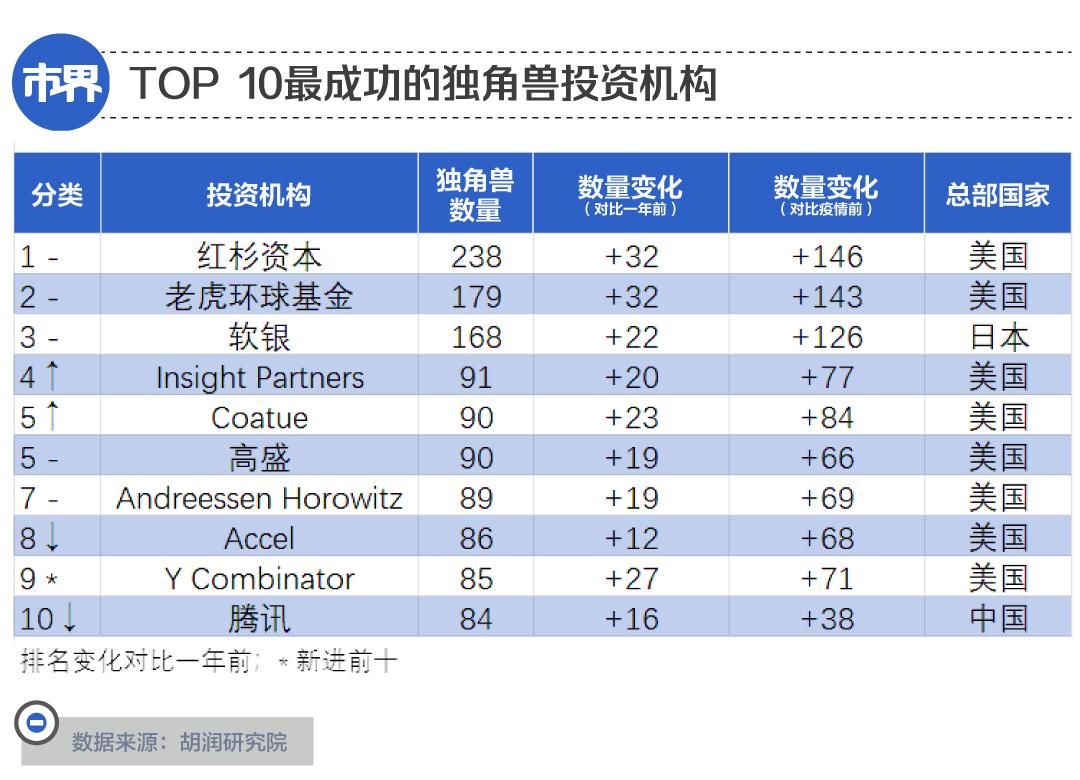
In the list of global unicorns released by Hurun in 2023, Sequoia Capital has once again become the most successful unicorn investment institution in the world by investing in 238 unicorn enterprises, and is far ahead of well-known institutions such as Tiger Global Fund and Softbank. It is precisely because of its great influence that the spin-off of Sequoia Capital has also caused a lot of heated discussion in the investment community. 

In fact, this spin-off is not an emergency, but a long-simmering business restructuring of Sequoia Capital. As Shen Nanpeng, the main partner of Sequoia Capital and the founder of Sequoia China, told the media, "Now the similarities between different entities of Sequoia are much less, and discussions on the split business have been going on for the past two or three years." 

After the split, Sequoia Capital’s original three major sectors will not only have their names adjusted, but also the focus of investment will be quite different. 

Among them, Sequoia USA and Europe will continue to use the brand of Sequoia Capital, Sequoia China will continue to use the Chinese brand name of Sequoia, but it will use "HongShan" as its English name, and Sequoia India/Southeast Asia will be renamed as "Peak XV Partners". A person familiar with the matter told CNBC, "Sequoia China has diversified its investment strategy into multiple funds, while Sequoia’s US and European businesses have been reorganized to focus on Sequoia Capital Fund. Sequoia India/Southeast Asia is highly focused on the excavation and cultivation of early founders. " 

As for the reasons for the split, Sequoia’s explanation is that the deeper localization of each region makes the global centralized operation mode of some back-office functions gradually become a burden. With the internationalization of investment enterprises in different regions of Sequoia and the global competition, competition will inevitably occur, while Sequoia shares the same brand in all regions, which will bring troubles to the founders and member enterprises. 

As for why it split up at this time, it may be related to the rapid growth of Sequoia China. Although Sequoia China has brought rich economic returns to Sequoia Capital in recent years, the distribution of benefits has become increasingly prominent. After splitting up, Sequoia China will no longer share profits with Sequoia Europe and the United States. 

Sequoia revealed in the letter that after 18 years of development, Sequoia China’s investment direction is more extensive and diversified. Thanks to the opportunity of China market, Sequoia China set up a new infrastructure fund to invest in the infrastructure of China’s new economic industry, and in recent years, it developed M&A investment. These unique businesses of Sequoia China have enabled it to break through the definition of traditional venture capital and become an investment institution with diversified business. 

According to Forbes’ report in May, Sequoia China holds 10% of ByteDance’s shares, and the potential value of this investment alone is as high as tens of billions of dollars. In addition, the nearly 200-fold floating profit from previous investment in the US Mission and public comments has made Sequoia China earn a lot of money. According to the Securities Times, Sequoia China has managed over 300 billion yuan and invested in more than 900 projects. 

On the other hand, after Roelof Botha took over the top management of Sequoia USA, the "Sequoia Fund" launched was hit hard by the US stock market, and its performance was not satisfactory. Then in March of this year, the sudden "death" of Silicon Valley Bank made Sequoia America, as its big customer, also experience a test. 

In fact, under the leadership of Shen Nanpeng, Sequoia China already has a localized investment and management model, and has formed a unique system of Sequoia China in terms of business model and concept, so it needs independent operation to play a greater advantage. Coupled with the domestic fund-raising environment, state-owned funds are becoming an increasingly important source of LP. Abandoning Sequoia China as a foreign capital based on the basic situation of China will also be more conducive to its future development. 

Shen Nanpeng, the head of Sequoia China, is a "genius" in the investment field. 

Shen Nanpeng, born in Haining, Zhejiang Province in 1967, worked in Citibank, Lehman Brothers Asia and Deutsche Bank China after obtaining a master’s degree from Yale University. Later, he co-founded Ctrip.com and Home Inn, and both companies landed on Nasdaq in only four years. In 2005, Shen Nanpeng founded Sequoia China, and continues to write the legend of making wealth. 

In Forbes’ list of the world’s best venture capitalists in 2023 released not long ago, Shen Nanpeng topped the list for the fourth time with his investment in Meituan, Pinduoduo and ByteDance, which is also his 12th time on the list and his fourth time winning. Previously, Shen Nanpeng had been the best venture capitalist for three consecutive years (2018-2020), and was also the highest ranked Chinese investor for nine consecutive years since he was listed in 2012. 

Sequoia China official website shows that besides investing in the giants of their respective tracks mentioned above, there are also well-known enterprises such as Alibaba, JD.COM, Debon Logistics, noah wealth, DJI Innovation, BYD, Weilai, Gaode, Aauto Quicker, Huolala, Vipshop, Huada Gene, Jumeiyoupin, Qihoo 360 and ZTO Express. 

In fact, an important factor for the success of Shen Nanpeng and Sequoia China comes from the strategy of "investing early and investing small". Through the forward-looking judgment of industry trends, we choose the fields with the most promising investment opportunities and make an early layout, instead of spending a lot of money on strategic investment later. According to statistics, Sequoia China invested more than half of all fields before the A round (including the A round). 

Moreover, Sequoia China’s investment logic has experienced a gradual change in three stages: the whole track-the key track-the subdivision track in the key track. By dividing the broad investment fields more finely, it can help it to judge the next round of enthusiasm more accurately in advance. In addition, paying attention to post-investment management also enables Sequoia China to find risks in time, grow together with the invested enterprises, and give follow-up strategic guidance, so as to maximize profits. 

Through observation, it is not difficult to find that, in addition to science and technology industry, Sequoia China’s main investment fields include medical and health care and traditional consumption tracks. With the continuous emergence of new tracks, Sequoia China has also begun to exert its strength in these new fields. In a previous public speech, Shen Nanpeng revealed that "in recent years, hard technology projects such as artificial intelligence and high-end manufacturing have exceeded 80% of Sequoia China’s portfolio". 

According to Zhou Kui, a partner of Sequoia China, Sequoia China will capture new trends along three frameworks in the future, namely, low carbon, cloud/end structure evolution and industrial digitalization. 

Zhou Kui explained, "Traditional energy is resource-driven, new energy is innovation-driven, and all aspects of power generation, energy storage and application are improving efficiency through science and technology, so we will pay attention to the release of existing industrial capabilities and innovation and progress of new energy. As for the evolution of the cloud/end structure, although there have been various ups and downs and great changes in the world, the pace of technological progress and industrial development of the communication revolution has not stopped. We have seen opportunities for core software and chips, as well as the original information industry institutions. Gradually restructuring. " 

Korean media: Li Zaiming’s hunger strike entered the 15th day, and the ruling party asked it to stop for the first time.

  [Global Network Report Trainee Reporter Jiang Ailing] According to South Korea’s "Central Daily News" reported on the 14th, Li Zaiming, leader of the Common Democratic Party, the largest opposition party in South Korea, entered the 15th day of hunger strike. On the morning of the same day, Jin Qixuan, the leader of the ruling National Power Party, first asked Li Zaiming to "stop the hunger strike".

  According to the report, Jin Qixuan, the leader of the ruling National Power Party, said at the meeting of the Supreme Council of the Party held by the National Assembly that Li Zaiming’s health condition was deteriorating, and the medical team also suggested interrupting the hunger strike. It is not advisable for the representatives of the first opposition party with huge seats to continue their hunger strike during the important parliamentary period when they need to review the government’s state affairs and pay attention to the country’s life next year. Jin Qixuan shouted to Li Zaiming, "For whatever reason, I solemnly ask you to stop the hunger strike that harms your health."

  The report also said that more and more voices in the Common Democratic Party persuaded Li Zaiming to stop the hunger strike. However, so far, Li Zaiming has not made a clear response to these demands. Earlier, Li Zaiming moved the hunger strike place from the tent in front of the National Assembly Hall to the office of the head of the Common Democratic Party to continue the demonstration. Park Sung Jun, a spokesman for the Democratic Party, said that this was Li Zaiming’s firm will to continue the hunger strike.

  According to a report in South Korea’s I-NEWS 24 on the 13th, Lu Yingmin, secretary of Cheongwadae during the Moon Jae in administration, also visited the hunger strike site in Li Zaiming yesterday. According to the report, Lu Yingmin conveyed Moon Jae in’s advice. (Moon Jae in) said, "The health of the party leader is more important than anything. We should stop the hunger strike as soon as possible and restore health." Li Zaiming expressed his gratitude for this and said that he would make a decision after careful consideration.

  Earlier, Yonhap News Agency reported on August 31st that Li Zaiming announced an indefinite hunger strike and sit-in to protest Yin Xiyue’s government’s "undermining democracy" and other acts. He asked the government to explicitly oppose Japan’s nuclear pollution of water discharged into the sea and apologize to the people for undermining people’s livelihood. South Korea’s "East Asia Daily" reported on the 10th that Li Zaiming continued his hunger strike indefinitely in the tent of the sit-in demonstration in front of the main building of the National Assembly that day. On the 11th day of the hunger strike, Li Zaiming chose to lie down and demonstrate because of his declining physical strength.

Four brilliant actors in "Qing Qing Daily": Liu Guanlin relies on jokes and Chen Xiaoyun relies on "green tea"

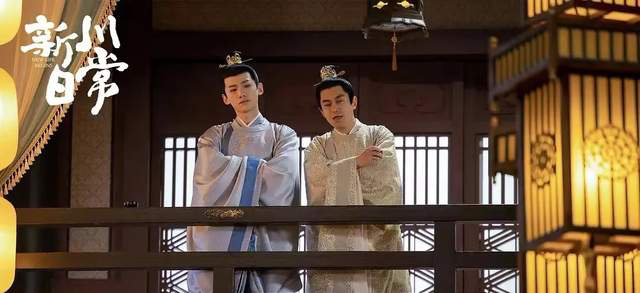
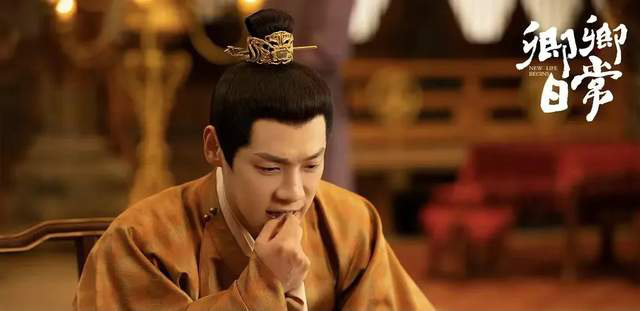
Bai Jingting and Tian Xiwei starred in "Everyday of Qing Qing", and the popularity of Iqiyi has exceeded 9500. The emotional drama of Yin Zheng and Li Wei, the male and female heroines, is very popular. With the increasing attention of the audience, a number of supporting roles in this drama have also attracted the attention of the audience. The four supporting roles of "Everyday for Qing Qing" attracted the audience’s attention by virtue of their unique characters and good acting skills.

Liu Guanlin plays Yin An.

In called Daily Life, Yin Dark is the three little masters in Xinchuan. Before he appeared, Li Wei had heard about him. It is said that the three little masters are not only romantic and rich, but also charming and well proportioned. Li Wei is full of curiosity about the three little masters, and only when he really met, did he know how outrageous the rumors are. The three little masters are ugly, and most importantly, they waited for Li Wei and the three little masters.

The three young masters are a big joke in Everyday of Qing Qing. The role of Yin An is played by Liu Guanlin, and Liu Guanlin is known as "King Gigi". He looks very happy. When the three young masters of "Well proportioned" unveil the mysterious veil, the audience can’t help laughing when they see the true face of Liu Guanlin. In addition, Liu Guanlin’s acting skills are relatively relaxed, and his scenes are very relaxed. However, it seems funny and enterprising.

Chen Xiaoyun plays Hao Jia.

Hao Jia is beautiful and gentle. As soon as she appeared, the five young masters were taken away. However, Hao Jia is a very calculating girl. Her purpose in coming to Xinchuan is very clear, that is, she wants to marry the office leader, and she used a little strategy. Hao Jia got her wish, but the office leader is not a good match. Hao Jia can only.

Hao Jia is regarded as a high-ranking "green tea" in "Qing Qing Daily", especially the scenes in which she lured the office leader and fought against the main office. More importantly, Hao Jia is very transparent, and she knows the true face of the office leader, so she will not deliver her sincerity, but only regards the office leader as the "owner" and Hao Jia.

It is not easy for Chen Xiaoyun to play "green tea" Hao Jia in "Qing Qing Daily", and Hao Jia doesn’t make people feel disgusted. Chen Xiaoyun’s face value is high, and she is also suitable for playing such a woman with full inner drama. Chen Xiaoyun’s performance in "Qing Qing Daily" has also been recognized by the audience.

Zixin Wei plays Su Shen.

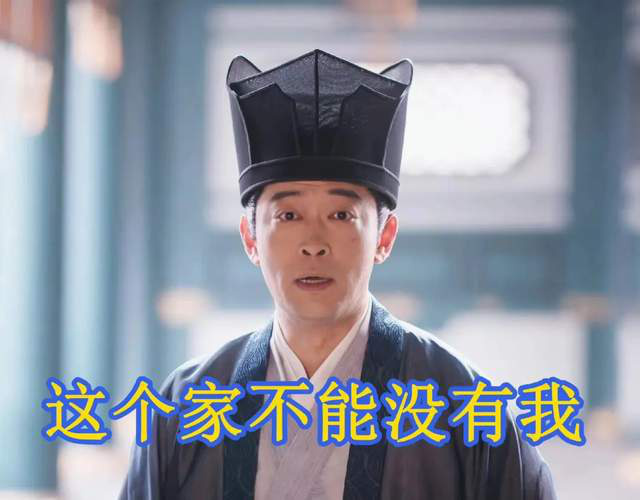
The emotional drama of Yin Zheng and Li Wei in Qing Qing Daily is very impressive, and Su Shen, the housekeeper, contributed greatly to the couple’s further affection. "This family can’t live without Su Shen", and many netizens who follow the drama say that Su Shen will assist the feelings of the hero and heroine at a critical moment. "Why don’t you understand? I’m really anxious." See Li Wei don’t understand Yin Zheng’s feelings, Su Shen is really worried.

Su Shen is played by actor Zixin Wei in Everyday for Qing Qing, and he is also a funny actor in the play. Zixin Wei’s acting skills are relatively natural, and he plays the role of Su Shen vividly, which is well received by the role circle. The popularity of the actors is also rising, especially Bai Jingting’s business with Weibo trumpet, whose head portrait is Su Shen. This wave of operation has attracted the attention of the audience to Zixin Wei.

Wang Yimiao plays Yu Zhan.

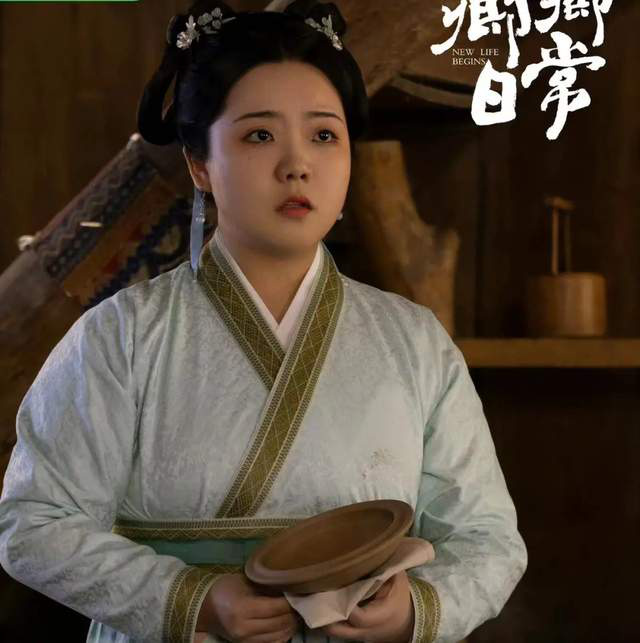
After the heroine of Qing Qing Daily came to Xinchuan, there were two maids who served her, one was a jade lamp, and the other was a jade bottle. Among them, the jade lamp attracted the attention of the audience because of its chubby appearance.

Li Wei is the kind of easy-going host, and Yuzhan and Yuping are very loyal to her. Not only that, but they are also on the front line of eating melons. They have a panoramic view of the master’s every move. Yuzhan is played by Wang Yimiao, who is mainly pleasing in appearance. Although it is difficult to play the leading role in such a figure, it is a skill to play the supporting role brilliantly.

There are many supporting roles with bright spots in "Qing Qing Daily", including the "big injustice" five young masters and her spicy wife Shangguan Jing, as well as the "twenty-four solar terms" girl of three young masters, which left a deep impression on the audience. After the broadcast of "Qing Qing Daily", the popularity was very high, and these treasure supporting roles were also one of the reasons for the drama’s brilliance.

Baolong Art Museum presents a double exhibition of "Luwei X Jin Zai Rong" to discuss art and life.

On April 12th, the double exhibitions "Little Days Embroidered with Poems: Luwei Art Project" and "I Love Donuts: Jin Zairong’s solo exhibition" opened in Shanghai Baolong Art Museum, and two different and related handcraft art worlds officially settled in Hall 5 of Baolong Art Museum. Both exhibitions advocate an attitude of "aesthetic life" and are committed to letting the audience enter the venue and see more possibilities of art.

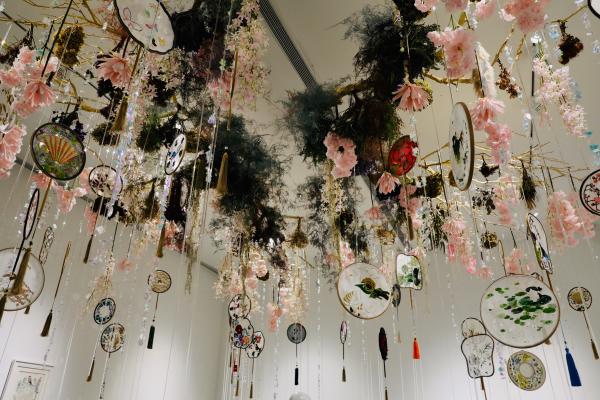
"Little Days Embroidered with Poetry" focuses on the artistic works of Luwei Embroidery Studio that combine eastern and western skills, culture and interest, covering dresses, round fans, screens, etc., trying to let people appreciate the inheritance and innovation of embroidery and make "Little Days" live into "Poetry" with art; "I love donuts" brings more than 500 donut ceramic works of different shapes and colors by young Korean artist Kim Jae-jung, including the series "Gottxxxl Collection" tailored for Baolong Art Museum, which brings "sweet power" to the audience and reflects on the fast-disappearing era.

Exhibition site of "Luwei Art Project"

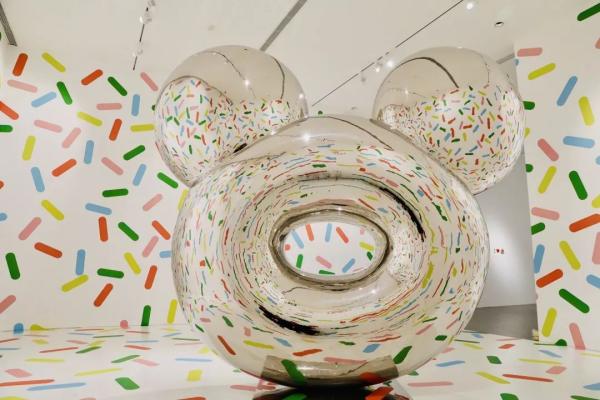
"I love donuts" exhibition site

It is understood that this double exhibition advocates an attitude of "aesthetic life", and is committed to connecting the museum with the artists, so that more visitors can enter the museum and see more possibilities of art and life.

Young Luwei Art Project

In 2017, at the opening night dinner of the San Francisco Ballet, Tan Yuanyuan, the chief ballet artist, appeared in a black-and-white trailing dress. The hand-made French embroidery of the skirt was exquisite and elegant. This dress, which was rated as one of the best dresses in the audience by Forbes, was made by Luwei Embroidery Studio.

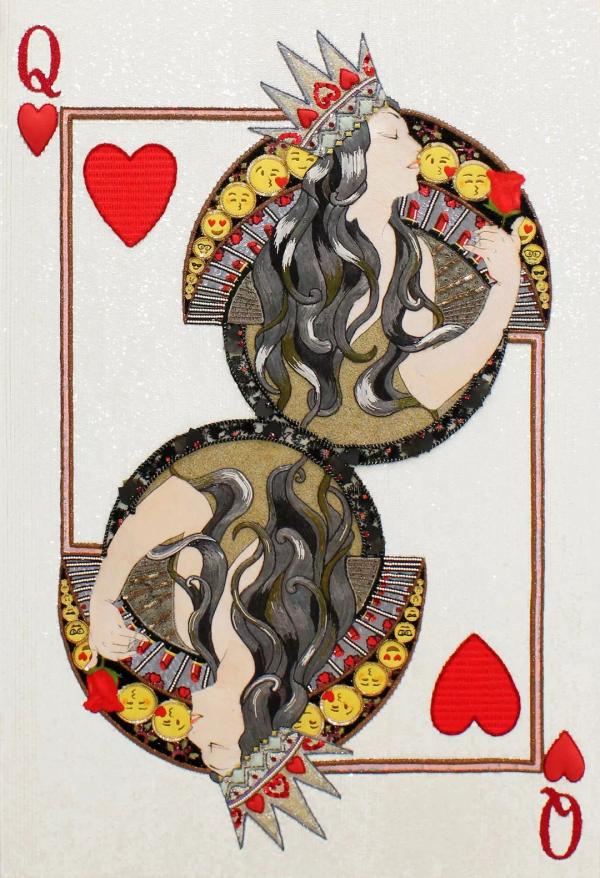
This time, the Baolong Art Museum will show the combination of eastern and western skills of Luwei embroidery studio. The exhibits also include "THE QUEEN" in the EMOJI series, Hua Dan series of artworks, screen series and round fan series, all of which show the wonderful fusion of French craftsmanship and Chinese classical interest.

Embroidered "THE QUEEN"

French embroidery spread from the East to France via the Silk Road. Now, two young designers, Zhang Xiaoxing and Song Yaqiao, have brought it back to China to create a new embroidery culture with China characteristics.

At the exhibition site, Zhang Xiaoxing and Song Yaqiao told the The Paper reporter that "French embroidery will be bolder in color, rich in materials, with emphasis on creativity, composition, collage and mixing of colors and materials. Chinese embroidery is mostly made of silk thread, which emphasizes smoothness and exquisite craftsmanship. The material selection of French embroidery is more diverse. "

Designers Song Yaqiao and Zhang Xiaoxing

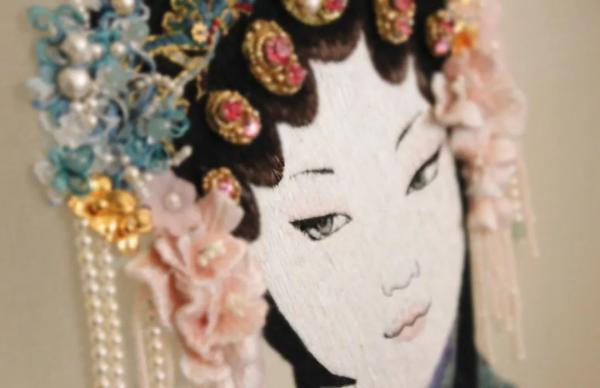
The "Hua Dan series of artworks" in the exhibition hall echoes this view. The faces of Hua Dan and Tsing Yi characters express the delicate skin with Suzhou embroidery, and are combined with French embroidery.

For the two designers, they can calm down and endure loneliness, sitting for hours, constantly trying the possibility of French embroidery and exploring the boundaries of French embroidery. When talking about the duration of embroidery works, Zhang Xiaoxing and Song Yaqiao said, "It depends on the size and complexity of the works. Fast works can be completed in a few hours, while slow works take a team a year to complete. At the same time, three-dimensional collage needs to conceive and deal with more details, which will take more time than flat embroidery. "

Embroidery, "Little Hua Dan" in Hua Dan series.

In their eyes, embroidery is a form of expressing art, and it is not limited to a carrier. Its carrier can be clothes, decorations, brooches, etc.

The inspiration of embroidery comes from life, from the change of seasons and scenes. "Many of our embroidery works are also around flowers, birds, insects and fish. Some lovely, young and modern works actually come from the current life culture and our understanding of the thinking of young people." The two designers said this.

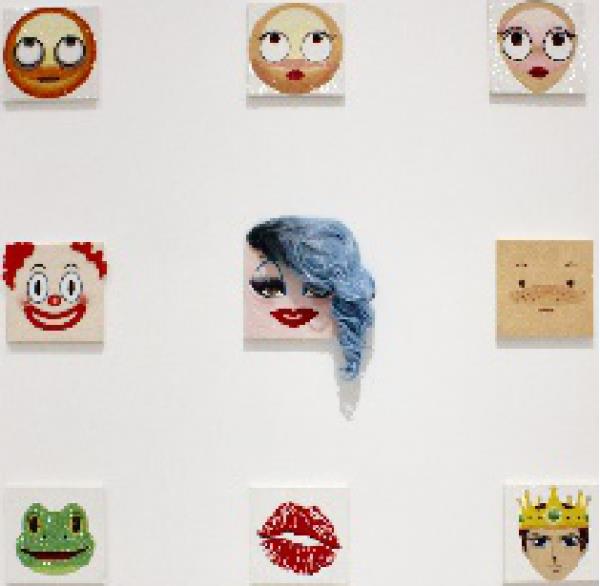
Embroidered "Schematic Diagram of Jiugongge"

Zhang Xiaoxing and Song Yaqiao told reporters that they tried to integrate Chinese elements with modern Western expressions and make embroidery younger, instead of just a painting that is mounted on the wall and gives people a sense of distance. And this young creative way is exactly the inheritance way of embroidery technology in their eyes. "The theme and form of Chinese Su embroidery have a certain sense of distance for contemporary young people. Therefore, we will do some themes and materials that attract young people and want to make young people interested. "

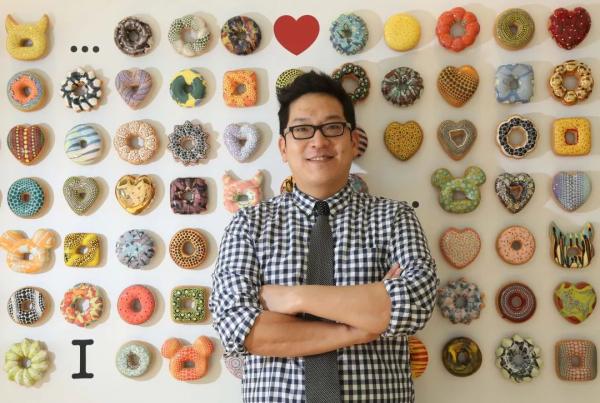
Kim Jae-young and his "Donuts" Sculpture

On the other side of the exhibition hall of "Luwei Art Project", there is a solo exhibition "I Love Donuts" by Korean artist Kim Jae-jung. Although all nutritionists will teach you to say no to sweets, doughnuts, the bomb in calories, are still a favorite dessert for the public. Kim Jae-young also loves donuts and makes them into sculptures.

Artist Jin Zairong

Like other pop artists, Jin Zairong’s works can quickly arouse the instinctive reaction of the audience. Donuts, as an obvious symbol in our life, are novel in shape and eye-catching. When you enter the exhibition hall and face them, you seem to be instantly taken into a doughnut shop. A delicious dream begins. ……

After a series of solo exhibitions in new york and Hongkong, Jin Zairong brought a room full of donut sculptures to Baolong Art Museum: Donut Reflect Yourself(2019), a small circle made up of mini donuts, and 618 donuts "Look Delicious But Donut Touch! (2013-2018), XL Donut 001 with Mickey Mouse ears, etc.

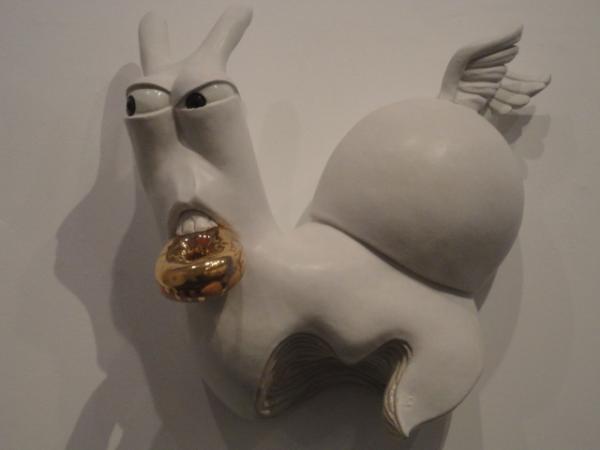
Jin Zairong told reporters that the origin of his works of art can be said from a snail. "In 2000, I saw a very small American snail when I went out for a walk one day. Although it climbs slowly, I realize that the direction is the most important thing. It doesn’t matter how fast you run. It’s interesting, just like myself. So I started making the Snail series. In this series, I used the specular reflection effect. When the audience saw the snail, they could resonate with themselves in the reflection. "

In 2008, Kim Jae-jung was in self-doubt because of his investment failure in the global financial crisis, reflecting on money, reputation, power and the original motivation to become an artist. Donuts have become one of the few things that can make him happy-its simple shape and taste allow him to immerse himself in childhood happiness, even for a short time. In the subsequent sculpture "Snail", he gradually incorporated the element of "doughnut", which was a metaphor for greedy humanity, and began to explore the relationship between people with doughnuts as the carrier.

Jin Zairong’s Sculpture of Snail

In addition, for Kim Jae-young, doughnuts freed him from the color fear caused by weak color blindness. He said, "I am a little color blind, not serious. It was discovered in high school. Donuts are also part of the color blindness test on campus. I didn’t use colors very much when I made Snail sculpture in the early days, but doughnuts made me gradually get rid of my fear of colors and began to study colors and use them. “

The production process of doughnut sculpture goes through clay firing, glazing, multiple coloring and decorative embellishment. It usually takes six days to make a doughnut. Nowadays, Jin Zairong is doing his own color research, embellishing clay with different crystals and different glaze colors, showing a variety of design feelings on doughnuts.

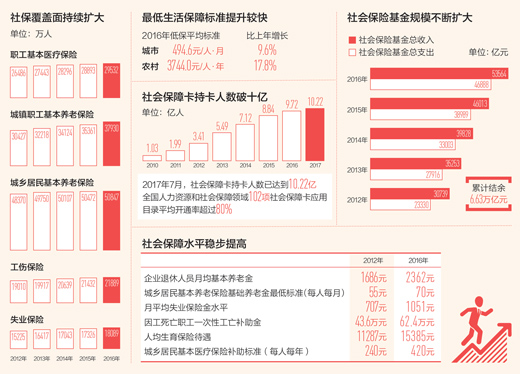
A picture says five years: social security benefits continue to improve and the days are more practical.

  "Last year, the pension rose by 170 yuan, and this year it rose by 151 yuan. Now it is 3,787 yuan per month, and life is more secure." Song Lizhong, a 64-year-old retired worker in Benxi City, Liaoning Province, nodded. In recent years, the state has continuously raised pensions, which has made the old people feel a lot more secure.

  This is the five years that social security coverage has been continuously expanded, and China has established the social security system with the largest population coverage in the world — —

  By the end of 2016, the number of people participating in basic pension, unemployment, industrial injury and maternity insurance in China reached 888 million, 181 million, 219 million and 185 million respectively, and the number of people covered by basic medical insurance exceeded 1.3 billion. The dream of "universal medical insurance" came true. China’s achievements in expanding the coverage of social insurance have been fully affirmed and highly praised by the international community. In 2016, at the 32nd Global Congress of the International Social Security Association, the government of China was awarded the "Outstanding Achievement Award in Social Security", becoming the second country in the world to receive this honor.

  This is a five-year period of continuous improvement of social security benefits, and the people share more of the fruits of development — —

  The average monthly basic pension for enterprise retirees nationwide increased from 1686 yuan in 2012 to 2362 yuan in 2016, with an average annual increase of 8.8%. In 2017, the state continued to raise the pension at an average level of 5.5%. Serious illness insurance covers more than 1 billion urban and rural residents, and the payment ratio stipulated by the policy is not less than 50%.

  This is a five-year period of continuous breakthroughs in social security reform, and the fairness and convenience of social security have been significantly improved — —

  In China, the old-age insurance systems of government agencies, institutions and enterprises are merged, a unified basic old-age insurance system for urban and rural residents is established, and the basic medical insurance system for urban and rural residents is integrated. At present, the "expressway" for direct settlement of hospitalization expenses across provinces and different places has been fully completed, connecting all medical insurance co-ordination areas, and opening 7,226 designated medical institutions for direct settlement of hospitalization expenses across provinces and different places. Eligible insured people have bid farewell to "funding" and "running errands" since then.

The Market Supervision Bureau of Lanzhou City, Gansu Province issued a typical case of investigating and handling the "Tiequan" action in the field of people’s livelihood in 2022.

China Quality News Network News Since the "Iron Fist" campaign was launched in 2022, the market supervision system in Lanzhou City, Gansu Province has focused on the key areas of "the most anticipated public opinion, the greatest harm, the greatest market supervision risk and pressure", concentrated law enforcement forces, and made a heavy blow to investigate and deal with a number of typical cases. Typical cases are now publicly exposed.

Guo Tianci sold biodiesel that did not meet the national standards without a license.

Lanzhou Municipal Market Supervision Administration received a report that Guo Tianci, the party concerned, was suspected of selling biodiesel that did not meet the national standards without a license near Gansu Property Logistics Park in heping town. After verification, the above-mentioned behavior of the parties violated the provisions of the second paragraph of Article 13 of the Product Quality Law and Article 2 of the Measures for the Investigation and Punishment of Unlicensed and Unlicensed Business, which constituted an illegal act of selling biodiesel that did not meet the national standards without a license. According to Article 49 of the Product Quality Law and Article 13 of the Measures for Investigating and Handling Unlicensed and Unlicensed Business, Lanzhou Municipal Market Supervision Administration confiscated 7.02 tons of unqualified biodiesel and imposed an administrative penalty of 93,770.4 yuan.

A case of using food raw materials to process food beyond the shelf life in Zhongxingtang Restaurant in Yuzhong County.

During the supervision and inspection, Yuzhong County Market Supervision Administration found that Yuzhong Xingtang Restaurant was suspected of using food raw materials beyond the shelf life to process food, and did not establish the incoming inspection system as required. Upon verification, the above-mentioned behavior of the parties concerned violated the provisions of Item (3) of Article 34, Paragraph 2 of Article 53 and Article 54 of the Food Safety Law, and constituted an illegal act of processing food with food raw materials exceeding the shelf life and failing to establish an incoming inspection system as required. According to the provisions of Item (2) of Paragraph 1 of Article 124 and Item (3) of Paragraph 1 of Article 126 of the Food Safety Law, Yuzhong County Market Supervision Administration issued a warning to the parties concerned according to law, confiscated 33 kinds of food raw materials such as refreshing kidney flowers that exceeded the shelf life, and imposed an administrative penalty of 60,000 yuan.

Gansu World Trade City Real Estate Co., Ltd. used untested special equipment.

During the supervision and inspection, the law enforcement officers of Chengguan District Market Supervision Administration found that Gansu World Trade City Real Estate Co., Ltd. was suspected of illegal use of special equipment that had not been registered for use and had not been inspected. After verification, the above-mentioned behavior of the parties violated the provisions of Article 33 and Paragraph 3 of Article 40 of the Special Equipment Safety Law, and constituted an illegal act of using special equipment that has not been registered and has not been inspected. According to the provisions of Item (1) of Paragraph 1 of Article 83 and Item (1) of Paragraph 1 of Article 84 of the Law on Safety of Special Equipment, Chengguan District Market Supervision Administration ordered the parties concerned to stop using the special equipment and imposed an administrative penalty of 60,000 yuan.

Lanzhou Tumendun Vegetable Oil Reserve Co., Ltd. produced and operated rapeseed oil that did not meet food safety standards.

The "Xiangyuan pure fragrant rapeseed oil" produced by Tumendun Vegetable Oil Reserve Co., Ltd. in Lanzhou City was judged as "unqualified product" through state supervision and sampling inspection. The above-mentioned behavior of the parties violated the provisions of Item (2) of Paragraph 1 of Article 34 of the Food Safety Law and constituted an illegal act of producing and selling food (vegetable oil) that did not meet food safety standards. According to Item (1) of Paragraph 1 of Article 124 of the Food Safety Law, Lanzhou Municipal Market Supervision Administration ordered the parties concerned to correct their illegal acts, confiscated 83 barrels (5 liters/barrel) of vegetable oil illegally produced and operated, and imposed an administrative penalty of 50,254 yuan in fines.

Lanzhou Huayun Pickles Factory manages pickles that do not meet food safety standards.

"Pickled pickles" produced by Lanzhou Huayun Pickled Vegetables Factory was judged as "the production and operation of food exceeded the scope and the use of food additives exceeded the limit", and the above-mentioned behavior of the parties violated the provisions of Item (4) of Paragraph 1 of Article 34 of the Food Safety Law, which constituted an illegal act of producing food beyond the scope and using food additives exceeded the limit. According to Item (3) of Paragraph 1 of Article 124 of the Food Safety Law, Lanzhou Municipal Market Supervision Administration ordered the parties concerned to correct their illegal acts, confiscated 139 bags (1,000g/bag) of pickles illegally produced and operated, and imposed an administrative penalty of 50,000 yuan.

Lanzhou Hospital of Integrated Traditional Chinese and Western Medicine issued a false advertisement case.

During the supervision and inspection, the law enforcement officers of Chengguan District Market Supervision Administration found that Lanzhou Hospital of Integrated Traditional Chinese and Western Medicine displayed advertisements such as "Go to the ground immediately after the operation", "No recurrence", "No sequelae" and "No failure to repair the case" on its portal website, and the hospital was suspected of publishing false or misleading advertisements. After verification, the above-mentioned behavior of the parties violated the provisions of Article 4 of the Advertising Law and Item (8) of Paragraph 1 of Article 6 of the Measures for the Administration of Medical Advertisements, and constituted an illegal act of publishing false advertisements. According to the first paragraph of Article 55 of the Advertising Law, Chengguan District Market Supervision Administration ordered the parties concerned to correct their illegal acts and imposed an administrative penalty of 26,415.08 yuan in fines.

Case of non-implementation of government-guided prices, government pricing and failure to clearly mark prices according to regulations in Yantan furniture market in Lanzhou.

Chengguan District Market Supervision and Administration Bureau received a report that the property toll collectors in Lanzhou Yantan Furniture Market were suspected of illegal acts of charging 2 yuan for motorcycles parked in the market for less than 30 minutes. Upon verification, the above-mentioned behavior of the parties violated Article 12 and Paragraph 1 of Article 13 of the Price Law, Item (3) of Article 10 of the Measures for the Administration of Motor Vehicle Parking Services in Lanzhou, and Item (2) and Item (1) of the Announcement on Amending Some Provisions of the Measures for the Administration of Motor Vehicle Parking Services in Lanzhou issued by Lanzhou Development and Reform Commission on November 26, 2019. According to Articles 39 and 42 of the Price Law and Item (2) of Paragraph 2 of Article 9 of the Provisions on Administrative Punishment of Price Violations, Chengguan District Market Supervision Administration ordered the parties concerned to correct the illegal acts and imposed an administrative penalty of 254,248 yuan in fines.

Lanzhou juweiyuan food co., ltd. produced and operated chicken essence seasoning that did not meet food safety standards

The "Chicken Essence Seasoning" produced by Lanzhou Juweiyuan Food Co., Ltd. was judged as "the items of sodium glutamate and disodium flavor nucleotide did not meet the standard requirements of SB/T/0731-2003 Chicken Essence Seasoning" by national supervision sampling inspection, and the above-mentioned behavior of the parties violated the provisions of Item (13) of Article 34 of the Food Safety Law, which constituted an illegal act of producing and selling chicken essence seasoning that did not meet the food safety standards. According to the provisions of the second paragraph of the Food Safety Law, Gaolan County Market Supervision Administration ordered the parties concerned to correct their illegal acts and imposed an administrative penalty of 50,832 yuan in fines.

Yuzhong Kangxiujie Cosmetics Retail Store prepares cosmetics by itself.

During the supervision and inspection of Kangxiujie cosmetics retail store in Yuzhong County, the law enforcement officers of Yuzhong County Market Supervision Administration found that there were 8 kinds of cosmetics such as "repair cream", "moisturizing cream" and "acne medicine" with inconsistent labels, and 32 self-made labels, which were suspected of illegal acts of preparing cosmetics by themselves. After verification, the above-mentioned behavior of the parties violated the provisions of the second paragraph of Article 38 of the Regulations on the Supervision and Administration of Cosmetics, and constituted an illegal act of cosmetic operators preparing cosmetics by themselves. According to Item (5) of Article 60 of the Regulations on Cosmetics Supervision and Administration, Yuzhong County Market Supervision and Administration Bureau ordered the parties concerned to correct their illegal acts, confiscated 17 bottles (cans) of homemade cosmetics and 32 homemade labels, and imposed an administrative penalty of 30,864 yuan in fines.(Source: Lanzhou Municipal Market Supervision Administration)

The goal of improving the ecological environment quality was successfully completed, and the proportion of excellent surface water quality sections increased by 23.8 percentage points.

The reporter learned from the recently held national conference on eco-environmental protection that in 2022, the construction of beautiful China was solidly promoted, the discharge of major pollutants in the country continued to decline, the goal of improving eco-environmental quality was successfully completed, and the eco-environmental protection work achieved hard-won new results.

According to the Ministry of Ecology and Environment, in 2022, 25 new cities across the country were included in the scope of clean heating support in the northern region, and the ultra-low emission transformation of 210 million tons of crude steel production capacity and the rectification of more than 46,000 outstanding volatile organic compounds were completed. We will continue to investigate and rectify the sewage outlets of the Yangtze River, the Yellow River and the Bohai Sea into the sea, start the investigation and evaluation of the pollution situation of mines left over from the history of the Yellow River Basin, promote the remediation of black and odorous water bodies in county towns and county-level cities, delimit township-level centralized drinking water source protection zones, and implement actions to improve the water quality of rivers entering the sea. Carry out actions to prevent and control the source of heavy metal pollution such as cadmium in agricultural land soil. Environmental improvement in 16,000 administrative villages has been completed nationwide. The construction of a "waste-free city" was launched in an all-round way, and 14 new pollutants were included in the key control list.

According to reports, in the past 10 years, China has continued to fight the defense of blue sky, clear water and pure land, and the prevention and control of pollution has advanced in depth, and the improvement of ecological environment quality has achieved remarkable results. The average concentration of PM2.5 in key cities in China decreased by 57%, and the concentration of PM2.5 in cities at prefecture level and above fell below the first-stage transition value of 35 μ g/m3 determined by WHO for three consecutive years from 2020 to 2022. In 2022, the proportion of days with excellent air quality in cities at prefecture level and above reached 86.5%, making China the country with the fastest improvement rate of air quality in the world.

In the past 10 years, the proportion of excellent surface water quality in China has increased by 23.8 percentage points, reaching 87.9%, which is close to the level of developed countries. For three consecutive years, the main stream of the Yangtze River reached Grade II water quality, and the main stream of the Yellow River reached Grade II water quality for the first time. The proportion of excellent water quality in coastal waters nationwide increased by 17.6 percentage points. Black and odorous water bodies are basically eliminated in the built-up areas of cities at prefecture level and above. In the past 10 years, China has successfully achieved the goal of "zero import" of solid waste, effectively controlled the environmental risks of soil and groundwater, and significantly improved the rural ecological environment.

The Ministry of Ecology and Environment said that the prevention and control of environmental pollution will be further promoted in 2023.

Promote the blue sky defense war-promote the construction of environmental infrastructure such as natural gas pipeline network, promote clean heating in the northern region in an orderly manner according to local conditions, promote ultra-low emission transformation and comprehensive treatment of key industries, carry out in-depth treatment of volatile organic compounds, deepen joint prevention and control of air pollution in key areas, and implement the noise pollution prevention and control action plan.

Promote the defense of clear water-promote the pilot project of water ecological assessment in the Yangtze River basin, comprehensively implement the rectification of tributaries entering the Yellow River, organize the rectification of black and odorous water bodies in cities (including county towns), consolidate and improve the level of drinking water safety, and comprehensively strengthen the supervision of mariculture, marine engineering, marine dumping and marine garbage.

Promote the battle of defending the pure land-strengthen the implementation effect of major projects to control the source of soil pollution, strengthen the control of soil pollution in production enterprises and closed relocation enterprises, delimit key areas for groundwater pollution prevention and control, and continue to promote rural environmental improvement. Strengthen the treatment of solid waste and new pollutants, further promote the high-quality construction of "waste-free cities", further promote the reform of strengthening the supervision, utilization and disposal capacity of hazardous wastes, start the pilot project of new pollutant treatment, and carry out in-depth prevention and control of heavy metal pollution in key industries. (Reporter Liu Yi, Yan Jiangze)

Over the years, Shuibai has drunk 7 bottles of bottled water, and the purest one is it.

What do you drink? Have a bottle of mineral water!

This is probably the most common dialogue in daily outings, and we have become very accustomed to selling it in supermarkets.Small bottled water is called mineral water.For mineral water, it seems that no one has ever been as entangled as drinking drinks. Which brand is better?

Which brand is healthier?But is bottled water really all mineral water? Actually, it is not!

Over the years, Shuibai has drunk 7 bottles of bottled water, and the purest one is it.

Today, we have selected seven kinds of bottled water that are most common to everyone from the bottled water on the market. Let’s take a look at the differences between these eight kinds of bottled water!

Bottled water is not as simple as you think, some are "pure" and some are "impure"

We are all used to calling bottled water mineral water, but in fact mineral water is just one of many kinds of bottled water. At present, mineral water is roughly divided into four types:

Over the years, Shuibai has drunk 7 bottles of bottled water, and the purest one is it.
Wahaha is pure water without impurities.

Pure water:"Pure water without impurities" made by RO reverse osmosis membrane technology, distillation and other processes.

In principle, it can be said to be pure H2O. For example, Wahaha, Runtian and Nestle used in this test are all pure water.

Over the years, Shuibai has drunk 7 bottles of bottled water, and the purest one is it.
Chunyue is artificially added mineral water.

Mineral water:Mineral water is generally made of urban tap water as raw water, then purified, added with minerals, sterilized and filled.

It can be seen that there are additives such as potassium chloride and magnesium sulfate on the ingredient list of some bottled water. Why should additives be added to drinking water?

This is artificial mineral water. Are these additives harmful to human body?

Please rest assured that all the products that can be marketed are products that meet the national Hygienic Standard for the Use of Food Additives (GB2760-2007). For example, the pure joy and ice dew in this test are all mineral water.

Over the years, Shuibai has drunk 7 bottles of bottled water, and the purest one is it.
Nongfu Spring is natural water, not natural mineral water.

Natural water:Low-level treatment (filtration, ozone treatment, etc.) of surface water or underground spring water, artesian well water, etc., to retain the mineral elements necessary for human body in raw water. For example, the most classic Nongfu Spring is typical natural water.

Over the years, Shuibai has drunk 7 bottles of bottled water, and the purest one is it.
Baisui Mountain is a natural mineral water.

Natural mineral water:Water containing a certain amount of minerals and trace elements is collected by natural gushing or drilling in the deep underground. For example, the Baisui Mountain in this test is natural mineral water.

OK, after seeing the above categories, do you think that the water in these years has been wasted? There are so many classifications of bottled water, which used to be collectively called mineral water.

Test: Purity of pure water varies. Natural water contains more minerals.

So is the water that is nominally XX water really XX water? Next, we will test it through a professional small instrument to see how the water quality of each bottle is.

Over the years, Shuibai has drunk 7 bottles of bottled water, and the purest one is it.

TDS and mineral content of 7 bottles of water were measured with TDS pen and mineral pen.

I don’t know, according to the measured results, there are some differences in the measured data of different bottled water due to different reasons such as purification equipment, formula and water quality.

Over the years, Shuibai has drunk 7 bottles of bottled water, and the purest one is it.
Measured data of bottled water of various brands

The first is pure water. It can be seen that although the TDS values of the three products are very low after testing, they almost reach the standard of pure water, but onlyThe Wahaha family achieved 0, which is relatively the purest of the three bottles of pure water.Yes.

Next, let’s look at mineral water. I don’t know if it’s because we all buy mineral water under Coca-Cola (the same formula as the company? ), you can seeThe TDS and mineral content of the two products are similar..

Finally, natural water and natural mineral water, although the water source and processing methods are different, but from the perspective of minerals and TDS values,There is not much difference between the two data..

However, the artificially added mineral water, which is safer than everyone is worried about, is rich in dissolved solids even more than natural water according to the measured TDS data.

Therefore, it can basically be judged that the actual mineral raw materials added in each bottle of water are very small, so it is very safe.

Over the years, Shuibai has drunk 7 bottles of bottled water, and the purest one is it.
Test results of PH value of different bottled water

First of all, I will give you a little knowledge. Don’t be too superstitious about drinking weak acid or weak alkali water. It is scientifically certified that as long as the water that meets the national standards is a good water source, weak acid and weak alkali will not have a positive or negative impact on the human body, and there is no therapeutic effect.

In addition, in the national standard GB5749-2006, the PH value should be between 6.5 and 8.5 in cities and towns and between 6.5 and 9.5 in rural areas, which is a conventional limit indicator. From the test results of 7 bottles of bottled water, the difference of pH is also different.

Comment: Which bottle of water should I drink?

First of all, you should make it clear that the main purpose of bottled water is to quench your thirst, so no matter whether you drink pure water or mineral water, most normal users are also trying to quench their thirst, so there is no difference between good and bad in theory.

Some people may say that mineral water and natural mineral water contain minerals, which can supplement trace elements, but in fact, the content is really very small, which is basically not very helpful to the human body.

Including some high-end bottled water imported from abroad, in fact, there is little difference between ordinary water and human health, mainly depending on personal habits and consumption power.

Over the years, Shuibai has drunk 7 bottles of bottled water, and the purest one is it.

Ministry of Transport: Rainfall, thunderstorms and other weather affect the passage of many roads.

  On June 19th, 2022, the Xiangjiang section of Quanzhou County, Guilin City, Guangxi Province, was hit by the rising water level of rainstorm river. People’s visual map

  From 20: 00 on June 19 to 20: 00 on June 20, there were heavy rains in parts of northeastern Inner Mongolia, northern and eastern Jiangnan, and northern South China. Among them, there were heavy rains in parts of northwestern Jiangxi, central Zhejiang, northeastern Guangxi, and local heavy rains in northwestern Jiangxi and central Zhejiang. Thunderstorms occur in parts of northwestern Hebei, northeastern and central Inner Mongolia, southern Heilongjiang, southern Anhui, southwestern Jiangxi, eastern Guangdong, southwestern Chongqing, eastern Sichuan, northeastern Guizhou, central Ningxia and southwestern Tibet. In addition, there are fogs in northern Hebei, Beijing, Tianjin, northern Jilin, eastern and southwestern Liaoning, eastern Shandong, southern Jiangsu and southwestern Chongqing.

  The main sections affected by heavy rain are:

  Beijing-Taiwan Expressway (G3) in Huangshan, Anhui Province

  Beijing-Hong Kong-Macao Expressway (G4) Linxiang, Hunan — Yueyang — Kaihui section, section in Changsha, Yizhang, Hunan — Shaoguan, Guangdong — Guangzhou section

  Shenhai Expressway (G15) in Shaoxing, Zhejiang, Ningbo, Zhejiang — Taizhou — Wenzhou — Ruian section

  Changtai Expressway (G15W) Shaoxing, Zhejiang — Shengzhou — Taizhou section

  Yongjin Expressway (G1512) Ningbo, Zhejiang — Shengzhou — Jinhua section

  Wenli Expressway (G1513) Wenzhou, Zhejiang — Lishui section

  Changshen Expressway (G25) in Zhuji, Zhejiang, Jinhua, Zhejiang, Lishui, Zhejiang — Yunhe section

  Ji-Guang Expressway (G35) the boundary between Henan and Anhui provinces — Jingdezhen, Jiangxi — Yingtan section

  Daguang Expressway (G45) Conghua, Guangdong — Guangzhou section

  Chang-Zhang Expressway (G5513) Changsha — Yiyang section of Hunan province

  Hangrui Expressway (G56) in Hangzhou and the boundary between Zhejiang and Anhui provinces — Huangshan section of Anhui and the boundary between Anhui and Jiangxi provinces — Jingdezhen, Jiangxi — Jiujiang section

  Shanghai-Kunming Expressway (G60) in Hangzhou, Jinhua, Zhejiang — Nanchang — Xinyu section in Jiangxi and Shaoyang in Hunan — Longhui — Dongkou section

  Baomao Expressway (G65) Yangshuo, Guangxi — Pingle — Zhongshan section

  Fuyin Expressway (G70) Jiangxi Nancheng — Fuzhou — Jiujiang — Huangmei section of Hubei province

  Quannan Expressway (G72) Yongzhou, Hunan — Hunan-Guangxi provincial boundary — Quanzhou section of Guangxi, Guilin section of Guangxi, Luzhai of Guangxi — Liuzhou section

  Lanhai Expressway (G75) in Duan, Guangxi

  Shankun Expressway (G78) Hezhou, Guangxi — Zhongshan — Pingle section, Liuzhou, Guangxi — Yizhou section

  Hangzhou Bay Ring Road (G92) Hangzhou — Shaoxing, Zhejiang, Ningbo, Zhejiang.

  Hangzhou Xinjing Expressway Fuyang, Zhejiang — Tonglu — Jiande section

  Longli Expressway Zhejiang Longyou — Lishui section

  Taijin Expressway, Zhejiang Linhai — Xianju — Hengxi section

  Changsha section of Changliu Expressway

  National Highway 104 Hangzhou — Shaoxing, Zhejiang — Wenzhou — Pingyang section

  Jiujiang, Jiangxi, National Highway 105 — Nanchang — Xin ‘gan Section and Guangdong Lianping — Guangzhou section

  Longgang, Hubei Province, National Highway 106 — Chongyang — Pingjiang, Hunan — Liuyang section, Rucheng, Hunan — Shaoguan, Guangdong — Guangzhou section

  National Highway 107, Yunxi, Hunan — New city — Changsha Section and Yizhang, Hunan — Qingyuan, Guangdong — Guangzhou section

  National Highway 111, Ang ‘angxi, Heilongjiang — Qiqihar — Fuyu section

  205 National Highway Anhui Tanjia Bridge — Huizhou — Huangshan — Pucheng, Fujian — Xiaohu section

  National Highway 206 from Anhui East to — Jingdezhen, Jiangxi — Yingtan — Nanchengduan

  Shaoyang, Hunan, 207 national highway — Hezhou, Guangxi — Wuzhou section

  Hunan Passage of National Highway 209 — Liuzhou section of Guangxi

  Dushan, Guizhou, National Highway 210 — Nandan, Guangxi — Duan — Mashan section

  National Highway 301 in Qiqihar, Heilongjiang Province

  Shaowu, Fujian, National Highway 316 — Fuzhou, Jiangxi — Nanchang — Jiangxi-Hubei provincial boundary section

  Section of National Highway 319 in Liuyang, Hunan, Changsha — Yiyang section of Hunan province

  Section of National Highway 320 in Hangzhou and Fuchun River in Zhejiang — Jiande — Quzhou — Shangrao, Jiangxi — Yingtan — Nanchang — Wanzai Section and Kangqiao in Hunan — Shaoyang — Longhui section

  National Highway 321, Wuzhou, Guangxi — Guilin section

  Qidong, Hunan Province, National Highway 322 — Guilin section of Guangxi and Luzhai section of Guangxi — Liuzhou — Heshan section

  Jiangxi Dayu, National Highway 323 — Guangdong Nanxiong — Hezhou, Guangxi — Liuzhou — Hechi — Bama section

  Tianlin, Guangxi, National Highway 324 — Jiuzhou section

  National Highway 329 Hangzhou — Shaoxing, Zhejiang and Cixi, Zhejiang — Ningbo section

  National Highway 330 Wenzhou, Zhejiang — Lishui section, Zhejiang Jinhua — Lanxi — Shou Chang section

  The main sections affected by thunderstorms are:

  Beijing-Taiwan Expressway (G3) Lujiang, Anhui — Tongling section

  Beijing-Hong Kong-Macao Expressway (G4) Guangzhou — Shenzhen section of Guangdong province

  Beijing-Tibet Expressway (G6) Huailai, Hebei — Zhangjiakou — Huai ‘an Section and Pingluo, Ningxia — Yinchuan — Wu Zhong — Zhongning section

  Jingxin Expressway (G7) Huailai, Hebei — Zhangjiakou — Huaian section

  Suiman Expressway (G10) in Harbin

  Harbin-Nantong Expressway (G1011) in Harbin

  Shenhai Expressway (G15) Shenzhen, Guangdong — Guangzhou section

  Dingwu Expressway (G2012) Ningxia Zhongning — Zhongwei Duan

  Changshen Expressway (G25) Xingning, Guangdong — Longchuan — head river

  Hurong Expressway (G42) in Daying, Sichuan

  Ningwu Expressway (G4211) Maanshan, Anhui — Wuhu section

  He ‘an Expressway (G4212) Lujiang, Anhui — Huaining — Anqing section

  Daguang Expressway (G45) Ganzhou, Jiangxi — Longnan section

  Longhe Expressway (G4511) in Longnan, Jiangxi and Heyuan, Guangdong.

  Shanghai-Chongqing Expressway (G50) Huzhou, Zhejiang — Xuancheng, Anhui — Wuhu section, Chizhou, Anhui — Anqing — Jiezidun section

  Wuhu Expressway (G5011) in Wuhu, Anhui Province

  Baomao Expressway (G65) in Dazhou, Sichuan Province

  Fuyin Expressway (G70) Ninggan Provincial Boundary — Guyuan, Ningxia — Wu Zhong — Yinchuan section

  Guangzhou-Kunming Expressway (G80) in Guangzhou

  Pearl River Delta Ring Road (G94) in Zhuhai, Guangdong, Dongguan, Guangdong — Shenzhen whole line

  Xuanda Expressway Hebei Xuanhua — Yangyuan section

  Zhangshi Expressway Zhangbei, Hebei — Xuanhua section

  Guanghui Expressway Guangzhou — Zengcheng section of Guangdong province

  National Highway 105 Ganzhou Jiangxi — Jinji section, Jiangxi Longnan section, Guangdong Zhuhai section.

  Section of National Highway 107 in Dongguan, Guangdong

  Section of National Highway 108 in Guangyuan, Sichuan and Zitong, Sichuan.

  No.109 National Road, Hebei Huashaoying — Yangyuan section, Hangjinqi section in Inner Mongolia, Pingluo in Ningxia — Yinchuan — Yongning section, Zhongning section in Ningxia, Naqu section in Tibet.

  Huailai, Hebei Province, National Highway 110 — Zhangjiakou — Huai ‘an section and Shizuishan section in Ningxia

  National Highway 111 Horqin Right Wing Middle Banner in Inner Mongolia — Sudden spring — Ulanhot section

  National Highway 112 in Xuanhua, Hebei Province, Huashaoying, Xuanhua, Hebei Province

  National Highway 205, Maanshan, Anhui — Wuhu — Nanling section, Xingning, Guangdong — Longchuan — Heyuan section and Guangzhou section

  206 National Highway Tongcheng, Anhui — Huaining — Anqing section, Jiangxi Ruijin section, Jiangxi Xunwu section.

  Taibus Banner in Inner Mongolia, 207 national highway — The boundary section of Mongolia and Hebei Province and the section in Wanquan, Hebei Province.

  Section of National Highway 210 in Dazhou, Sichuan

  National Highway 211 Yinchuan — Lingwu section of Ningxia

  Section of National Highway 212 in Yuanba, Sichuan, Langzhong, Sichuan — Southern section

  Renshou, Sichuan, National Highway 213 — Jingyan — Qianweiduan

  Section of National Highway 221 in Harbin

  Section of National Highway 222 in Harbin

  Acheng, Heilongjiang, National Highway 301 — Harbin section

  Section of National Highway 302 in Ulanhot, Inner Mongolia

  Section of National Highway 307 in Yinchuan

  National Highway 309, Xiji, Ningxia — Ninggan provincial boundary section

  Pingliang, Gansu, National Highway 312 — Longde section of Ningxia

  National Highway 317 Tibet Dingqing — Baqing — Finger long — Kuomaduan

  Anhui Guangde, National Highway 318 — Xuancheng — Chizhou — Anqing — Yuexi section and Tibet Dazi domestic section

  Changting, Fujian, National Highway 319 — Ruijin section in Jiangxi and Pengshui in Chongqing — Wulongduan

  National Highway 320 in Yuping, Guizhou Province

  National Highway 323 Jiangxi Ruijin — Ganzhou — Nankang section of Jiangxi province

  Section of National Highway 324 in Zengcheng, Guangdong

  National Highway 326 along the river in Guizhou — Dejiang section

  The main sections affected by fog are:

  Jingha Expressway (G1) in Suizhong, Liaoning Province

  Beijing-Shanghai Expressway (G2) in Tianjin and Taixing in Jiangsu.

  Beijing-Taiwan Expressway (G3) in Tianjin

  Beijing-Tibet Expressway (G6) Beijing — Changping — Boundary section of Beijing-Hebei province

  Jingxin Expressway (G7) Beijing — Changping — Boundary section of Beijing-Hebei province

  Heda Expressway (G11) in Dalian

  Shenhai Expressway (G15) Wafangdian, Liaoning — Dalian section, Shandong Qixia domestic section, Shandong Rizhao domestic section, Jiangsu Ganyu domestic section, Jiangsu Dongtai — Rugao section

  Rilan Expressway (G1511) in Juxian County, Shandong Province

  Rongwu Expressway (G18) in Tianjin

  Qingdao section of Qingyin Expressway (G20)

  Qing-Xin Expressway (G2011) Qingdao Domestic Section

  Changshen Expressway (G25) Tianjin Hangu — Tianjin section

  Shanghai-Shaanxi Expressway (G40) in Haimen, Jiangsu Province and Jiuhua, Jiangsu Province

  Shanghai-Chongqing Expressway (G50) in Chongqing

  Baomao Expressway (G65) Sichuan-Chongqing provincial boundary — Chongqing section

  Beijing-Tianjin-Tanggu Expressway Tianjin — Tanggu section

  Tianjin-Jilin Expressway in Tianjin

  Tanggang Expressway Tangshan, Hebei Province — Luannan section

  Coastal Expressway in Tanghai, Hebei Province — Fengnan — Tianjin-Hebei provincial boundary section

  National Highway 102 in Suizhong, Liaoning Province

  National Highway 103 Tianjin — Tanggu section

  Section of National Highway 104 in Tianjin

  Section of National Highway 105 in Tianjin

  Section of National Highway 110 in Beijing

  Section of National Highway 111 in Fengning, Hebei Province

  National Highway 112 in Fengning, Hebei Province and Zunhua, Hebei Province

  Tonghua, Jilin, National Highway 201 — Huanren section in Liaoning and Dalian section.

  National Highway 202 in Jilin Baiqi, Pulandian, Liaoning — Dalian section

  National Highway 204 in Ganyu, Jiangsu, and Dongtai, Jiangsu — Haian — Rugao section

  National Highway 205 in Ninghe, Tianjin, Linyi, Shandong.

  206 National Highway Juxian County, Shandong Province — Linyi section

  Section of National Highway 210 in Chongqing

  National Highway 306 in Suizhong, Liaoning Province

  Section of National Highway 308 in Qingdao

  National Highway 309 in Rongcheng, Shandong Province

  Section of National Highway 319 in Fuling, Chongqing and Chongqing.

  National Highway 327, Linyi, Shandong — Linshu section

  National Highway 328, Taizhou, Jiangsu — Haian section

Many places contain illegal business loans to shock real estate speculation.

  In view of the phenomenon that business loans and consumer loans illegally flow into the property market, the supervision is continuing to increase management.

  A few days ago, the Shanghai headquarters of the central bank issued the "Guidelines for Shanghai Credit Policy in 2021" (hereinafter referred to as the "Guidelines"), requiring financial institutions to reasonably control the growth rate and proportion of real estate loans, and effectively prevent consumer loans and operating loans from illegally flowing into the real estate market.

  The reporter learned that at present, the banking industry in Shanghai has conducted a comprehensive self-examination of consumer loans and operating loans, and some banks have taken back illegal loans in advance; At the same time, the bank has reported the relevant situation of self-examination and rectification to the regulatory authorities, and the regulatory authorities are doing a summary.

  In addition to going overseas, CBN learned that the Shenzhen regulatory authorities recently convened a meeting of Shenzhen’s major commercial banks to investigate the inflow of business loans and consumer loans into the real estate market, and a special investigation was also started before the Spring Festival in Beijing.

  Industry insiders interviewed by CBN said that the illegal inflow of business loans and consumer loans into the property market not only affected the order of the real estate market, but also was not conducive to solving the problem of financing difficulties and expensive financing for small and medium-sized enterprises, and even further led to the market funds being divorced from reality. Strict supervision will help business loans return to the essence and promote the healthy development of the property market to some extent.

  Comprehensive self-examination of Shanghai banking industry

  For the Shanghai banking industry, it has become one of the key tasks this year to strictly control the illegal inflow of operating loans and consumer loans into the real estate market. The above Guidelines emphasize that in 2021, financial institutions should strengthen the management of personal housing loans, strictly examine the authenticity of personal information of lenders, and effectively prevent consumer loans and business loans from illegally flowing into the real estate market.

  As a matter of fact, before this regulation was re-voiced, the Shanghai Banking Insurance Regulatory Bureau issued the Notice of the Shanghai Banking Insurance Regulatory Bureau on Further Strengthening the Management of Personal Housing Credit in January, which put forward requirements for the commercial banks within its jurisdiction on the implementation of differentiated housing credit policies and housing credit management.

  Among them, banks within their jurisdiction are required to conduct a comprehensive self-examination of consumer loans, business loans and personal housing loans issued since June last year; At the same time, the interception mechanism is put forward, which requires improving the monitoring and interception mechanism of credit funds, expanding the monitoring scope of the model and improving the monitoring effect. Substantive control measures should be taken in a timely manner for violations of confirmed uses.

  CBN understands that all major banks in Shanghai are checking the flow of consumer loans and business loans. A related person from the risk management department of a state-owned bank told reporters that similar inspections will actually occur in previous years. It is a routine operation for banks to monitor the flow of post-loan funds. Banks generally search the keywords of the recipients, and then check the clues that hit the keywords twice. "It’s just that this year is stricter."

  As for the specific self-examination of banks, an assistant to the president of a city commercial bank branch told reporters that it mainly depends on the borrower and the flow of funds. For example, in the aspect of checking operating loans, first judge whether the borrower is a newly registered shell company, whether there is a normal business settlement transaction flow, and whether it is consistent with the characteristics of the main business.

  Then look at the flow of funds, including whether the payment counterparty is a normal business partner, whether it meets the business characteristics, and whether the payment amount meets the consistent settlement scale; At the same time, we should also pay attention to the capital inflow of actual controllers and affiliated enterprises, mainly to prevent the actual capital from returning after formal payment and then entering the property market.

  After the bank’s self-inspection, the regulatory authorities will also check and punish the violations accordingly. It is reported that banks in Shanghai are required to submit self-inspection and rectification reports to the Shanghai Banking Insurance Regulatory Bureau before February 28. The reporter learned that at present, banks have reported relevant information, and the Shanghai Banking Insurance Regulatory Bureau is sorting it out.

  In addition to strictly controlling the illegal inflow of credit funds into the property market, the Guidelines also stated that financial institutions should reasonably control the growth rate and proportion of real estate loans, strictly implement differentiated housing credit policies, and give priority to supporting the first set of demand for home ownership. This means that under the multi-party control, the bank’s housing-related funds will be restricted.

  In this context, many insiders believe that this year’s bank credit will face structural adjustment, that is, banks will reduce the proportion of housing mortgage loans and real estate development loans, and increase other retail and corporate loans. For example, explore other areas of high-quality credit supply and appropriately adjust the proportion of public and retail businesses. "Our bank will pay attention to small and micro industries, green and low-carbon industries, science and technology industries, pharmaceutical industries and so on." The above-mentioned city commercial bank branches help to call.

  Many places have also started investigations.

  In addition to the Shanghai area, CBN learned that the Shenzhen regulatory authorities recently convened a meeting of Shenzhen’s major commercial banks, demanding that business loans and consumer loans flow into the real estate market for investigation. A person from a joint-stock bank said that he had received relevant notice.

  A person from Shenzhen Branch of a large state-owned bank previously told CBN that in recent two years, the supervision and inspection of operating loans and consumer loans has not been relaxed, which has become a routine action. Last year, the bank was punished by supervision because its customers used operating loans to illegally speculate in real estate, and another big bank was also punished earlier.

  The reporter learned that this is a special inspection, which is different from the previous routine spot checks. The president of Shenzhen Sub-branch of a stock bank said that the main contents of the inspection are whether the mortgage property has been transferred for 8 months when applying for a loan, whether the loan has been issued for 6 months, and whether the lender and spouse have a record of buying a house in the last 3 months.

  This is also the second time since April 2020 that Shenzhen has investigated real estate speculation by operating loans. On April 20th last year, Shenzhen Banking Insurance Regulatory Bureau and Shenzhen Central Sub-branch of the People’s Bank of China jointly held a forum, requiring commercial banks to conduct a comprehensive investigation on whether credit funds flowed into real estate in violation of regulations. In principle, it is required that when applying for business loans from banks, borrowers should hold the real estate used as collateral for no less than six months.

  Bankers in Shenzhen said that the real estate speculation of business loans and consumer loans found in routine inspections was generally due to lax examination of bank loans, or the time between misappropriation and obtaining loans was too short, and the actual capital flow was not hidden when using loans. In order to avoid revealing the actual use, many lenders use multi-account transfer to hide the actual flow of loans.

  Beijing, Guangdong and other places have also begun to investigate the illegal flow of business loans into the property market. On February 1st, Beijing Banking Insurance Regulatory Bureau issued an announcement to carry out big data screening in view of some property buyers misappropriating consumer loans and operating loan funds as the purchase price, and to investigate the transaction cases in hot areas since January 25th.

  The above actions mainly verify the behavior of the purchaser and immediate family members who recently applied for the use of business loans in the full purchase of houses. In response to the previous "hype" in the housing market in Beijing school district, relevant departments also focused on the verification of housing transactions in hot school districts such as Financial Street, Dewai, Haidian Wanliu and Zhongguancun in Xicheng District.

  Take the case that was investigated as an example. Someone newly registered a small and micro enterprise last year. Within a few days after registering the enterprise, he signed a second-hand house in the key school district of Xicheng District. In the following months, he applied for several million yuan of operating loans from two banks.

  With the cooperation of banks, inspectors will investigate where the business loan was used after it was issued, and whether it flowed into the accounts of other shell companies through false business contracts. Due to the illegal entry of business loan funds into the property market, it is often necessary to "pour out" after multiple payments, and inspectors will check the final flow of each fund.

  According to media reports, on March 11th, various banking institutions in Guangdong comprehensively investigated the special risks of illegal inflow of credit funds into the property market, and strengthened the audit of operating loans and consumer loans under the guidance of financial supervision departments.

  In the eyes of the industry, it is necessary to crack down on illegal business loans. According to this year’s government work report, large commercial banks’ loans to small and micro enterprises will increase by more than 30%, and if the loopholes of illegal business loans entering the property market cannot be blocked, more funds will enter the property market in the guise of entity financing, which will boost the property market speculation.

  The wind of speculation in the property market may be suppressed.

  If the investigation and rectification of operating loans are carried out in many places, it will help to curb the speculation in the property market. Pan Hao, a senior analyst in RealData, believes that cities, especially big cities, which are expected to see their house prices rise too fast will strengthen the supervision of "illegal funds" flowing into the property market, and the measure of "recovering loans in advance" will have a deterrent effect on real estate speculators.

  "If there is a violation of regulations, it will have a great impact on the property market in hot cities, especially for first-tier cities such as Beijing, Guangzhou and Shenzhen." Li Yujia, chief researcher of Guangdong Housing Policy Research Center, told CBN.

  "Operating loans are all leveraged to buy houses, and some of them are replaced by operating loans under the encouragement of financial intermediaries. This is also illegal. If you really check it out, every pen can’t escape. " Li Yujia said that the final result is that many people will sell their houses.

  Lu Wenxi, chief analyst of Shanghai Zhongyuan Real Estate, told reporters that from the perspective of real estate types, strict investigation of real estate speculation by operating loans will have an impact on high-end projects, especially luxury residential projects. "Generally, people who buy luxury products are business owners. They often set out the money for business loans through various channels. After this method is strictly investigated, the moisture of luxury projects may be squeezed out."

  Guo Yi, chief analyst of Heshuo Agency, told the reporter that the speculative demand will indeed cool down because of this round of strict investigation for the people who are more popular in real estate speculation and use more business loans. However, in those cities with relatively stable markets, similar phenomena are less, for example, most cities in the north will be less affected.

  Li Yujia also said that all parties involved in illegal business loans, including commercial banks, will be severely punished. Recently, local banking regulatory bureaus have announced a number of cases of illegal business loans, and the penalties for banks are relatively strong.

  Zhang Dawei, chief analyst of Zhongyuan Real Estate, said that the core reason for operating loans flowing into the property market is the spread of mortgage loans, and it is also related to banks being both athletes and referees in the process of lending. He believes that from the bank’s point of view, the risk of operating loans is relatively higher than that of mortgage loans, but the interest rate of operating loans is lower than that of mortgage loans under the policy requirements, so banks are out of shape at the implementation level.

  "The recent crackdown on some behaviors of using new premises and new enterprises to register for business loans in the short term is very powerful. The strength of this policy will definitely curb the overheating of the market, let the operating loan return to its essence, help the business operation, and restrain the irrational and unhealthy development of the entire property market to a certain extent. " Zhang Dawei said.