分类归档 ertr

[2017 China E-commerce Summit] Li Bin, founder of car rental: Seek benefits for "old drivers" and let China’s driver’s license pass the world.

Li Bin, founder of car rental (photo by reporter He Chuan)

Li Bin, founder of car rental (photo by reporter He Chuan)

  Cctv news(Reporter He Chuan) Do you know what "renting a car" does? This is the first sentence that founder Li Bin said in his speech at the sub-forum of the 2017 China E-commerce Summit. After the speech, Li Bin said in an exclusive interview with CCTV: "We are an overseas car rental platform in go on road trip, and we are currently focusing on serving Chinese. Through our active efforts, more than 200 countries around the world have recognized China driver’s license. "

  Li Bin gave a detailed explanation of how this good deed for the welfare of China’s "old drivers" was made.

  Li Bin said, "After I finished my studies in Britain, I decided to go back to China to start a business. However, our eyes at that time were not on foreign countries, but on trying to rent a car on the Internet in China. With the rise of some large car rental companies, the market space and added value of goods left to us have been very small. At this time, we turned our attention to overseas markets. "

  In 2011, the car rental headquarters was formally established in Guangzhou. If Chinese wants to go abroad to go on road trip, he can’t do it without a driver’s license. This is the first problem they have to solve.

  "We pioneered the first international driver’s license translation certification. With our translation certification, tourists can pass through China driver’s license abroad without hindrance. The translation certification of China has been recognized by more than 200 countries and local taxi companies." Li Bin said: "In the promotion, we have encountered some interesting things. For example, in Europe, some car rental companies still stayed in the computerized desk office in the 1960 s, and the paperwork was very cumbersome. We developed a system to help them do paperless office, which helped us open up the market. "

  Li Bin also talked about a more interesting thing. For the sake of driver’s license recognition, they tried to promote the reform of Hawaiian traffic regulations that had not changed for many years.

  "In the United States, not all states recognize China driver’s license, such as Hawaii. In Hawaii, Chinese go on road trip’s enthusiasm is very high, but the local traffic regulations don’t allow it. After communicating with the official of Hawaii, we found that their traffic regulations have not changed for many years. With our participation, the Hawaiian official is studying how to promote this matter. "

  After Li Bin’s team gained a foothold in Europe and America, the Belt and Road Initiative provided Li Bin with a rare opportunity to expand its business to the whole world.

  Li Bin said, "We got on ‘ Belt and Road ’ This big ship has already entered the United Arab Emirates and other Central Asian countries; France, Belgium and other countries have also recognized the China driver’s license while renting a car to promote self-driving. "  

  Finally, Li Bin told reporters that renting a car has successfully raised more than 7 billion yuan. The next three years will be the outbreak of leaving go on road trip, and they will no longer be confined to the service field of China citizens, but the seamless connection of go on road trip between countries all over the world.

World nuclear power welcomes "China Core" high-temperature gas-cooled reactor, which has attracted international attention.

  China’s nuclear power has become a force that cannot be ignored in the world energy market. Li Guanxing, chairman of China Nuclear Society and academician of China Academy of Engineering, said recently that nuclear energy has entered a new era of large-scale development in China, and China is becoming the center of nuclear energy development, which has injected strong impetus into the global nuclear energy development. The scale of the units under construction ranks first in the world, and the technical route is "a hundred flowers blossom". Among the three generations of reactors, there are not only AP1000 and EPR imported from abroad, but also Hualong No.1 and CAP1400 independently developed. Among them, the world’s first high-temperature gas-cooled reactor demonstration project independently developed and built by China has attracted worldwide attention because of its fourth-generation nuclear power safety characteristics.

  The world’s first high-temperature gas-cooled reactor

  The project is progressing smoothly.

  Huaneng Shandong Shidaowan Nuclear Power Co., Ltd. is a holding company of China Huaneng Group Corporation, which is jointly built by Huaneng Group, China Nuclear Construction Group and Tsinghua University. Based on the 10 MW high-temperature gas-cooled experimental reactor in Tsinghua University, the project plans to build a 200,000 kW high-temperature gas-cooled reactor nuclear power unit.

  As one of the major national science and technology projects, the demonstration project of high-temperature gas-cooled reactor nuclear power plant started construction at the end of 2012 and is still under construction. The reporter saw in Huaneng Shandong Shidaowan Nuclear Power Co., Ltd. that office buildings, staff canteens, duty dormitories, training centers, comprehensive warehouses, emergency roads, docks, etc. have been put into use. The reactor building with a height of more than 40 meters stands tall and the nuclear power plant is shaded by trees.

  Since the 1960s, Britain, the United States and Germany began to develop high-temperature gas-cooled reactors. Since the mid-1970s, Tsinghua University Institute of Nuclear Research has started the research and development of high-temperature gas-cooled reactors. At the end of September, 2004, under the auspices of the International Atomic Energy Agency, Tsinghua University Institute of Nuclear Research conducted an inherent safety verification experiment on the 10 MW high-temperature gas-cooled reactor.

  The experimental results show that the reactor can be kept in a safe state without any human and machine intervention under serious accidents, including the loss of all cooling capacity, and the residual heat can be discharged. Professor Kedak, the former president of the American Nuclear Society, spoke highly of this safety experiment: "The technology and safety level of China, a high-temperature gas-cooled experimental reactor, has been at the forefront of the world."

  The reactor pressure vessel, the core component of two units of Shidaowan Nuclear Power Plant, was installed in 2016. The pressure vessel is about 25 meters high and weighs about 610 tons. It is independently developed and manufactured by Shanghai Electric Nuclear Power Equipment Co., Ltd., which has realized the localization manufacturing of super-large reactor pressure vessel equipment.

  According to Mao Wei, Party Secretary and General Manager of Huaneng Shandong Shidaowan Nuclear Power Co., Ltd., the pressure vessels, main helium fans and evaporators of the high temperature gas-cooled reactor demonstration project are all made in China.

  Shidaowan Nuclear Power Plant is located at the easternmost tip of Shandong Peninsula on the eastern coast, with excellent site conditions, stable geological structure, no historical record of tsunami, low surrounding population density, good traffic conditions and water intake conditions, and convenient power outlet. It is one of the excellent coastal sites with large-scale nuclear power base development and construction in China. It is also planned to build six million-kilowatt PWR nuclear power units, with a planned total capacity of more than 8 million kilowatts.

  High temperature gas-cooled reactor has attracted international attention.

  The position of high temperature gas-cooled reactor in the current nuclear power reactor type can be seen from the following classification.

  The first generation (GEN-I) nuclear power plant is an early prototype nuclear power plant, that is, the light water reactor nuclear power plant developed from 1950 to early 1960, such as Shiping Port Pressurized Water Reactor, Dresden Boiling Water Reactor in the United States and Magnox Graphite Gas Cooled Reactor in the United Kingdom.

  The second generation (GEN-II) nuclear power plant is a large-scale commercial nuclear power plant developed and built on the basis of the first generation nuclear power plant from late 1960 to early 1990, such as Kandu reactor in Canada and pressurized water reactor in the Soviet Union. At present, most nuclear power plants in the world belong to the second generation.

  The third generation (GEN-III) refers to the advanced light water reactor nuclear power plant, that is, the nuclear power plant that started operation from late 1990 to 2010. The third generation nuclear power plants adopt passive safety systems with standardized, optimized design and higher safety, such as advanced boiling water reactors, system 80+,AP1000, EPR and other European pressurized water reactors.

  The fourth generation (GEN-Ⅳ) is a nuclear power plant to be developed. Its goal is to reach the practical level by 2030. Its main features are high economy (equivalent to natural gas-fired power plants), good safety, small waste generation and prevention of nuclear proliferation.

  According to reports, unlike the pressurized water reactor technology used in the third generation nuclear power plant, the high-temperature gas-cooled reactor nuclear power plant has good inherent safety, which can ensure that the reactor core does not melt and a large amount of radioactivity is released under any accident, thus achieving the nuclear safety goal of the fourth generation nuclear energy system. The system adopts the traditional steam cycle, and the power generation efficiency can reach more than 40%, which is the highest power generation efficiency nuclear reactor at present.

  At present, the major nuclear countries in the world are actively developing high-temperature gas-cooled reactor technology for power generation and hydrogen production. The American Energy Act of 2005 requires the Department of Energy to develop and demonstrate the technical and economic feasibility of using high-temperature gas-cooled reactor technology to generate electricity and/or hydrogen by 2021. France’s Famatong Company is also actively carrying out research on high-temperature gas-cooled reactor technology, and has participated in the bidding for the Idaho high-temperature gas-cooled reactor project in the United States. Japan has built HTTR, a high-temperature engineering experimental research reactor, to study high-temperature gas-cooled reactor technology and high-temperature hydrogen production technology. Russia and the United States jointly develop and utilize high-temperature gas-cooled reactors to burn plutonium (Pu). South Africa has carried out the preliminary work of building a high-temperature gas-cooled reactor power station.

  Or become an important supplement to that world’s nuclear energy.

  With the support of National Energy Administration and relying on the construction of demonstration power stations, Huaneng Group has carried out the research on the commercialization prospect and economy of high-temperature gas-cooled reactors. The preliminary research results show that the high temperature gas-cooled reactor has unique competitive advantages such as inherent safety, simple system, small modularization, high power generation efficiency, wide application channels and strong site adaptability, and has potential economic competitiveness. High temperature gas-cooled reactor is especially suitable for large-scale hydrogen production because of the high outlet temperature of the core. High-temperature gas-cooled reactor can also be used in most application fields of process heat, including coal gasification and liquefaction, direct reduction steelmaking, thermal recovery of heavy oil, oil shale refining and so on.

  According to the promotion roadmap, it can be divided into the short-term preparation and start-up stage (the "Thirteenth Five-Year Plan" period) and the medium-term large-scale development stage (2021 — In 2030), the long-term leap-forward development stage (after 2031) takes three steps.

  Mao Wei believes that the high-temperature gas-cooled reactor will bring three benefits to China and the world energy:

  First, to meet the needs of the country to actively develop nuclear power. Modular high-temperature gas-cooled reactor has good inherent safety and high power generation efficiency: the power scale of single modular reactor is small, and power stations of different scales can be formed by combining multiple modules. Flexible in site selection and power grid requirements. In China’s nuclear power market, large-scale PWR nuclear power plants will play a leading role. Modular high-temperature gas-cooled reactor nuclear power plant can be used as a supplement to large-scale pressurized water reactor nuclear power plant to meet the strategic needs of the country to actively develop nuclear power.

  The second is to meet the country’s future demand for hydrogen production by nuclear energy and high-temperature process heat. With the further increase of oil demand and the decrease of recoverable reserves, it is expected that the international oil price will further increase and the international political and economic struggle around oil supply will further intensify. It is a new field of nuclear energy utilization to provide high-temperature heat source and realize large-scale hydrogen production by using the unique advantage of high-temperature gas-cooled reactor outlet temperature. There is also a demand for high-temperature process heat in thermal recovery of heavy oil, gasification and liquefaction of coal, steelmaking and chemical processes. Modular high-temperature gas-cooled reactor technology can be one of the main technologies to meet the country’s future demand for nuclear hydrogen production and high-temperature process heat.

  The third is to meet the needs of the country to develop advanced nuclear power technology. There is fierce international competition in the research and development of advanced nuclear power technology. In modular high temperature gas-cooled reactor technology, China has been at the forefront of the world, such as upgrading from experimental reactor technology to commercial reactor technology, thus realizing independent innovation in the field of advanced nuclear power technology. China has signed memorandums of understanding with Saudi Arabia, United Arab Emirates and other countries and regions on cooperation in high-temperature gas-cooled reactor projects, and has carried out preliminary work for 600,000 kW high-temperature gas-cooled reactor projects in many provinces and cities in China, so as to promote the commercialization of high-temperature gas-cooled reactor projects.

  "The high-temperature gas-cooled reactor demonstration project has the fourth generation safety characteristics, which is of great strategic significance for promoting China’s nuclear energy technology progress, implementing nuclear power going out, and making China move from a nuclear power country to a nuclear power country." Mao Wei said.

Qualcomm released Snapdragon 8+ and Snapdragon 7 mobile platforms: "Strong performance by 10% and low power consumption by 30%".

  On the evening of May 20th, Snapdragon Night, Qualcomm officially released the long-rumored Snapdragon 8+ and Snapdragon 7 mobile platforms. As the main mobile platforms in Snapdragon, Snapdragon 8 and 7 series have greatly improved their performance, experience and power, bringing new impetus to the mobile phone market this year.

first generationbraveDragon 8+ Mobile Platform: Better performance and lower power consumption.

  Every generation of Snapdragon 8 series mobile platforms was the focus of the market at that time. The previously launched Snapdragon 8 has been well-known terminal mobile phone manufacturers at home and abroad, such as OPPO, vivo, Glory, Xiaomi, Yijia, Samsung, etc., with its outstanding performance in AI, video and games. The adoption of Snapdragon 8+ has been affirmed, and the performance, video, games, connectivity and other experiences have been upgraded:

  -In terms of AI, it supports the seventh-generation Qualcomm AI engine, which improves energy efficiency by 20%;

  -In terms of audio, it supports Snapdragon Sound Snapdragon listening technology, including Qualcomm aptX Lossless lossless audio technology;

  -In terms of connection, it supports the 5G downlink rate of up to 10Gbps, and supports the user scenario of 5G+5G dual-card dual-pass, which can ensure that data transmission and phone calls do not conflict with each other, and maintain the industry-leading level in the speed of 5G uplink carrier aggregation and Wi-Fi;

  -In terms of images, it supports taking photos with a maximum of 200 million pixels, supporting simultaneous shooting of 8K HDR video and 64 million pixel photos, and single-frame progressive HDR;

  -In terms of games, it supports HDR games, VRS Pro, stereoscopic rendering and physical rendering features;

  -In terms of security, Snapdragon 8+ also supports Android Ready SE authentication, which can provide vault-level security features.

  The CPU comprehensive performance of Snapdragon 8+ is about 10% higher than that of Snapdragon 8, and the highest CPU frequency is also increased to 3.2GHz. At the same time, Snapdragon 8′ s GPU has reached the leading position in the industry in terms of performance and energy efficiency. On this basis, Snapdragon 8+ will continue to increase the frequency by about 10%, which will further improve the extreme GPU performance.

  With the enhancement of performance and other characteristics, people pay more and more attention to the power consumption of mobile phone processors, and the power consumption endurance performance of Snapdragon 8+ has also been improved obviously.

  Snapdragon 8+ adopts TSMC’s latest 4nm process, which makes its power performance more excellent. When running Aztec Ruins, the GPU power consumption of Snapdragon 8+ is 30% lower than that of Snapdragon 8, and the energy efficiency of Snapdragon 8+ will be more advantageous in the same performance. The picture on the right shows the comparison of CPU. The CPU of Snapdragon 8+ uses Cortex-X2, A710 and A510, which are very large cores. The CPU power consumption of Snapdragon 8+ is about 30% lower than that of Snapdragon 8 under the same performance.

  Compared with Snapdragon 8, Snapdragon 8+ reduces the power consumption of the whole SoC by 15%. On the performance of the whole machine, except CPU and GPU, Qualcomm has also made great adjustments in other modules, which makes the overall SoC performance excellent.

  In the performance of e-sports games, first of all, take the familiar "Bench" as an example. When the ambient temperature is 25 degrees and the highest picture quality is 810p, the Snapdragon 8+ curve is very stable after continuous testing for 1 hour, and the frame rate fluctuates little, and the average frame rate can reach 60.2 frames. In terms of power consumption, the average power consumption of Snapdragon 8+ can be reduced by 30% compared with Snapdragon 8 under the same test environment and conditions.

  In addition, let’s take a look at the performance in "the glory of the king", and intercept two sets of test scenes of 90 frames+extreme image quality and 120 frames+high definition image quality. Compared with Snapdragon 8, the energy efficiency of Snapdragon 8+ has improved by about 30% in both cases.

  For the daily usage scenarios of users, based on the battery capacity equal to less than 4000mAh, Qualcomm also gave the endurance data of more scenarios of Snapdragon 8+ compared with Snapdragon 8:

  -In terms of games, Snapdragon 8+ is nearly one hour longer than Snapdragon 8, and quite a lot of it is played in the 3 rd and 4 th innings of the glory of the king;

  -Video playback time can be increased by more than 80 minutes, which is close to the length of a movie;

  -Voice calls and WeChat video calls under the 5G network also increased by more than 5.5 hours and 25 minutes respectively;

  -social media, web browsing and App browsing can increase by more than 50 minutes, which is close to an extra commute time;

  -The most amazing thing is playing music. The playing time of Snapdragon 8+ music can be increased by nearly 17 hours.

  According to the above rich usage scenarios, it is believed that the increase of battery life will be one of the most obvious experience upgrades that Snapdragon 8+ brings to users.

  Overall performance, the main frequency of Snapdragon 8+ GPU increased by 10%, the overall performance of CPU increased by 10%, and the highest main frequency of CPU reached 3.2GHz. The overall power consumption of SoC is reduced by about 15%, and the power consumption of CPU and GPU is reduced by 30% respectively.

first generationbraveDragon 7 mobile platform: 4nm process andbraveDragon 8 feature blessing

  In addition to the first generation of Snapdragon 8+, Qualcomm also launched the first generation of Snapdragon 7 mobile platform, which is the first appearance of Snapdragon 7 Series platform after the brand naming system in Snapdragon was updated. Snapdragon 7′ s CPU is sunk on the basis of Snapdragon 8, which adopts a super-large core of A710 with a main frequency of 2.4GHz, three large cores of A710 with a frequency of 2.36GHz and four small cores of A510 with a frequency of 1.8GHz. On the whole, Snapdragon 7 has inherited the characteristics of Snapdragon 8, which is quite different from the previous generation of Snapdragon 778G. In terms of process, Snapdragon 7 adopts Samsung’s 4-nanometer process to achieve lower power consumption and longer battery life.

  This time, Snapdragon 7 Series mobile platform brought three firsts:

  Snapdragon 7 is the first 7-series platform supporting the 7th generation Qualcomm AI engine. Compared with the previous generation Snapdragon 778G, the detection accuracy of Snapdragon 7 can be improved by 25%, and the area required for face recognition is reduced from 25×25 pixels to 20×20 pixels, and it can detect up to 300 facial feature points, which is the same as that of Snapdragon 8. I believe that many friends have encountered the situation that people’s eyes are closed when taking pictures. If we can achieve more accurate face detection, we can only take pictures when people’s eyes are open or when people are smiling.

  Secondly, Snapdragon 7 is also the first 7-series platform that supports 200 million pixels shooting. It is based on 14-bit three ISPs, and can support the single-frame progressive HDR feature, which significantly improves the image quality compared with the previous generation Snapdragon 778G.

  Finally, Snapdragon 7 has sunk the features of Qualcomm Trust Management Engine supported by Snapdragon 8 to the 7-series platform for the first time, and has also passed the Android Ready SE certification, which can provide vault-level security features.

  In addition, Snapdragon 7 can also provide a good performance in the mobile game experience, mainly through the following aspects:

  First, the GPU graphics rendering speed of Snapdragon 7 is 20% higher than that of Snapdragon 778G. Snapdragon 7 also supports some Snapdragon Elite Gaming features, including Qualcomm Adreno image motion engine, which is a GPU-based frame prediction technology, which can save half the power consumption at the same frame rate or provide a higher frame rate at the same power consumption.

  Snapdragon 7 also supports Game Quick Touch, which ensures that the touch response speed of the game can be improved by more than 20% compared with that of Snapdragon 778G, and supports top GPU features such as variable resolution rendering. In addition to GPU, the game experience is closely related to CPU, display, connection and other factors. In terms of display, Snapdragon 7 supports QHD+ display, which is more detailed than FHD+ display supported by Snapdragon 778G.

  In terms of audio, Snapdragon 7 supports the Snapdragon Sound Snapdragon listening technology, which can prevent howling in the game and dynamically adjust the volume according to the real-time audio environment/scene.

  In terms of connection, Snapdragon 7 is the first 7-series platform that integrates Snapdragon X62 5G modem and RF system conforming to Release16 standard, with the highest downlink rate of 4.4Gbps, which is obviously improved compared with the previous generation Snapdragon 778G, and it can also support 5G+5G dual card dual communication. Wi-Fi has been upgraded from the previous generation of FastConnect 6700 to FastConnect 6900, which can provide faster and ultra-low latency Wi-Fi connection.

  Generally speaking, the mission of Snapdragon 7 is to sink the best mobility characteristics and innovation of Snapdragon 8. The first generation of Snapdragon 7 can provide an excellent gaming experience, which is enhanced by GPU, supported by some Snapdragon Elite Gaming features, immersive audio experience, display features, and some connection features that first landed on Snapdragon 7 Series.

Finally:

  According to Qualcomm’s official announcement and current rumors, mobile phone products equipped with Snapdragon 8+ and Snapdragon 7 mobile platforms will be launched as soon as this quarter by brands such as Black Shark, Glory, iQOO, Lenovo, Xiaomi, moto and Nubia, and PConline will also pay attention to it with you.

Observation | US "Tianjun" clarifies the vision of the next generation space architecture and seeks to maintain its absolute advantage.

Recently, SDA released the first information consultation on the federal business opportunity network of the US government, seeking the design concepts and schemes of satellite platforms, payloads, launch platforms and related ground facilities needed for the development of the next generation space architecture from the industry.

This is the first information consultation book issued by NASA since its establishment on March 12, and its development trend deserves attention.

The U.S. military believes that active satellites are powerful, but their survivability is insufficient, so it is necessary to explore new platforms. The picture shows the American SBIRS missile early warning satellite.

The development thinking of American space equipment is brewing a major change.

After Trump took office, he attached great importance to space. From the reconstruction of the space command, the establishment of the space army to the establishment of the space development agency, the US military’s space decrees, military orders and space equipment research and development system are undergoing major adjustments and changes. In this context, the US military is speeding up the planning and design of the next generation space system. The new version of the Missile Defense Assessment Report and the first project solicitation notice of the Space Development Agency reveal some clues.

In 1983, in order to prevent hostile countries from launching nuclear attacks on the United States and its allies, then US President Ronald Reagan proposed the "Star Wars" plan, which consisted of intercontinental ballistic missile defense and anti-satellite, and advanced the development of space weapons, which had a significant impact in history. Because the investment and technical difficulty of the "Star Wars" plan was too great, which exceeded the objective reality at that time, it was forced to suspend in 1993 and turned into a more realistic and feasible missile defense plan. In recent years, due to the rapid development of missile penetration technology, especially hypersonic technology, the missile defense system in the United States, which is mainly based on land and sea, is facing development bottlenecks, and there are calls and trends to shift the focus of missile defense to space.

On January 17 this year, the new version of the US Missile Defense Assessment Report clearly stated that the use of space can provide a more effective, flexible and adaptable missile defense posture. Space-based sensor system is not limited by geography, and can monitor, detect and track missiles launched almost anywhere in the world; Space-based interceptor and directed energy weapon are effective ways to intercept missile booster phase, effectively resist penetration and greatly improve the overall efficiency of missile defense system. Confirmed by the above statement, the US Congress has asked the Ministry of National Defense to carry out special research and demonstration on space-based sensors, space-based interceptors and even particle beam weapons, and come up with concrete and feasible development plans.

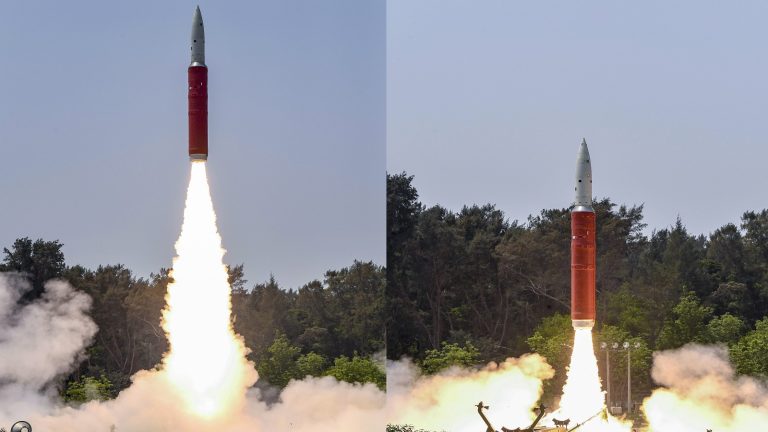
India conducted an anti-satellite test in March this year.

On July 1, the US Army’s New Space Development Agency issued the first project solicitation notice, which clearly pointed out the military needs of the US military’s new generation of space system construction to missile defense and space confrontation, marking a major change in the development ideas and ways of the US military’s space equipment system. The background is that the strategic focus of the United States has shifted to the competition of big countries, and it is believed that the existing space architecture and equipment can not maintain absolute superiority, especially in the case of the continuous development of anti-satellite missiles, cyber attacks and common-orbit spacecraft in some countries, once the space system dominated by large spacecraft is destroyed, it is difficult to replenish it in a short time, that is, there is insufficient flexibility; The second is that the existing space architecture and equipment can’t cope with emerging threats, especially hypersonic weapons, and the active missile early warning satellites can’t effectively provide timely early warning and tracking.

The new architecture will have a subversive impact on space attack and defense.

The first project solicitation notice of the Space Development Agency borrowed the idea of DARPA "Black Jack" satellite project, turned to the booming commercial space technology to seek subversion, and tried to develop the concepts, methods, technologies and systems related to the next generation flexible, flexible and agile space system based on micro-satellite technology, rapid launch technology and artificial intelligence technology.

According to the eight key space capabilities proposed in the "Space Vision of the Ministry of National Defense", the Space Development Agency proposed that the next generation space system of the US military should be composed of seven functional layers. First, the transport layer: it provides 7×24 hours uninterrupted and low-delay data transmission and communication around the world; The second is the tracking layer: it provides space-based target detection, early warning, tracking and indication to defend against the threat of advanced missiles (including hypersonic weapons); Third, the monitoring layer: monitoring time-sensitive targets around the clock, providing key guarantee for attacking enemy missile launchers, radar stations and command nodes before launching; The fourth is the deterrent layer: it provides the target situation awareness and rapid access and maneuver in the space range of the earth and the moon, and responds to the challenges posed by space attack and defense; Fifth, the navigation layer: provide positioning, navigation and timing capabilities in the environment of GPS refusal, and enhance the joint operational support capability under the conditions of space confrontation; Sixth, battlefield management: provide battlefield management, command, control and communication based on distributed artificial intelligence, including on-board intelligent autonomous mission planning, data processing, encryption and distribution, etc., and directly provide space information support for tactical users; Seventh, the ground support layer: providing the carrier system and ground facilities for the rapid maneuvering launch measurement and control of large-scale small satellite constellations, deploying portable, serialized and intelligent satellite application terminals, and providing supporting ground system support for flexible, elastic and agile on-orbit systems, thus forming an economical and practical next-generation space system.

The next generation space architecture attaches great importance to dealing with emerging threats.

As can be seen from the above-mentioned seven-layer architecture, the tracking layer and the monitoring layer mainly serve missile defense operations, especially for the whole-course target detection, tracking and indication of hypersonic vehicles; The deterrent layer and navigation layer are mainly oriented to space attack and defense confrontation, and the operational scope extends from low orbit and geostationary orbit to higher and farther earth-moon space; The battlefield management faces the intelligent development of space, further enhancing the timeliness and convenience of space-based information to support joint operations; The ground support layer provides rapid launch, measurement and control and application support for large-scale small satellite constellations, ensuring the rapid supplement and update of small satellite constellations under the condition of confrontation, and improving the efficiency of large-scale ground application of satellites; The transport layer provides interconnection between heaven and earth, between satellites in different functional layers and between satellites in the same functional layer, which constitutes the technical foundation and common support of the next generation space system.

To sum up, the development concept of the next generation space system of the U.S. military has changed from "making great beauty and ensuring zero risk" in traditional military space to pursuing "scale, economy and not being afraid of hitting" to win advantages, focusing more on missile defense and space attack and defense in target positioning, and emphasizing more practical and integrated functions and flexibility, flexibility and agility. Once the next generation space system of the US military is realized and put into actual combat, it will have a subversive impact on missile defense and space attack and defense operations, and change people’s existing understanding of the space battlefield, which deserves close attention from the world.

(The author is a professor at the Space Strategy Research Center of National University of Defense Technology)

New discovery! The largest known explosion in the universe has not stopped for 3 years.

  Xinhua News Agency, Beijing, May 12-Astronomers announced on the 12th that they had observed the "biggest" explosion in the universe so far, and the fireball produced was equivalent to 100 solar systems, and the explosion lasted for at least three years without stopping.

  According to Agence France-Presse, the explosion was named AT2021lwx, which was located in the depths of the universe 8 billion light-years away from the Earth and occurred at the age of 6 billion. The research report was published in the Monthly Journal of the Royal Astronomical Society. A study published in 2021 shows that the universe has a history of 13.77 billion years, with an error of about 40 million years.

  This is the first photo of the supermassive black hole in the center of the Milky Way galaxy released simultaneously by many astronomers around the world, including China, on May 12th, 2022. Xinhua News Agency (Photo courtesy of Event Vision Telescope)

  Researchers estimate that the brightness of the explosion AT2021lwx is 2 trillion times brighter than that of the sun, which is not the brightest explosion that has been observed so far. However, Philip Wiseman, the main author of the research report and an astrophysicist at the University of Southampton in the United Kingdom, said that the energy released by the explosion of AT2021lwx in the past three years exceeded the brightest explosion gamma ray burst GRB 221009A observed so far, which is the largest explosion observed in the universe.

  The gamma ray burst GRB 221009A was observed in October last year and ended 10 hours after it was discovered.

  Researchers first discovered AT2021lwx at the Zwaiki transient research facility in California in 2020, but they didn’t realize the scale and power of the explosion until they later observed it with a more powerful astronomical telescope. What caused the explosion is still inconclusive.

  The schematic diagram shows that in a binary system, white dwarfs devour the matter of their giant companion. Xinhua News Agency (provided by Australian National University)

  The researchers speculate that the most likely scenario is that a supermassive black hole slowly devours a huge gas cloud 5,000 times larger than the sun, triggering the explosion of AT2021lwx. However, Wiseman said that this explanation is not absolute, and researchers are working hard to test it with new models.

  They also thought of other possibilities, including supernova explosion or tidal destruction. Tidal destruction event refers to the process of releasing energy when a star is torn by a supermassive black hole. However, AT2021lwx is 10 times brighter than the previously observed supernova explosion and 3 times brighter than the tidal destruction event.

  The only cosmic event with the same brightness as the explosion of AT2021lwx is a quasar, that is, a supermassive black hole emits strong light in the process of devouring huge amounts of gas in the center of a galaxy. However, Wiseman said that the light emitted by quasars usually flickers, while AT2021lwx suddenly appeared three years ago and is still emitting light, which is unprecedented. (Yuan Yuan)

Infectious diseases in the epidemic: medical staff are desperately trying, and rumors are stirring up the situation.

Author: Yang Xiaoshuai Source: Southern Media College


Covid-19 VS natural and man-made disasters VS rumors  


Since December 2019, many cases of viral pneumonia have been found in Wuhan, Hubei Province, all of which were diagnosed as viral pneumonia. On January 12, 2020, it was temporarily named 2019 novel coronavirus by the World Health Organization, namely "2019-nCoV".


Since the virus began to spread, the number of suspected patients and confirmed patients has been on the rise. According to media reports, as of 21: 00 on February 2, the number of confirmed cases in China reached 14,489, 19,544 suspected cases and 304 deaths. …  


Since the outbreak of the epidemic, with the increasing number of infected people, there is also something undercurrent behind the epidemic, and that is rumors.

Unconsciously, they flowed out from different people and rushed to the network hot search. Since the outbreak of the epidemic, all kinds of rumors have appeared in BLACKPINK. The content is centered on the prevention and control of novel coronavirus, or spread around medical care, or around viruses, or around the media, or around government officials.


Around the medical experts, on January 22nd, Wuhan Health and Health Commission official micro @ Health Wuhan official micro posted a rumor: the information about Comrade Liu Qingxiang, deputy director of Wuhan Health and Health Commission was seriously untrue. Deputy Director Liu Qingxiang is 55 years old. Since the end of December last year, he has been sticking to the front line of pneumonia prevention and control in novel coronavirus. She has no daughter, only one son works in Han; Neither she nor her lover is a doctor, and her lover died in Han last year because of cancer. Online news is false. …


Around the media interpretation, around January 26th, a screenshot was circulated in various WeChat groups. At 9: 30 tonight, Bai Yansong, a CCTV news channel, hosted a live broadcast of novel coronavirus, inviting Academician Zhong Nanshan to introduce the epidemic situation, and invited parents and friends to watch it at that time. Subsequently, they were forwarded in the social circles of major schools, institutions and units, and some units even forced them to forward publicity. In the afternoon, Red Star News, Beijing News and other media reporters learned from the staff of CCTV News Channel "News 1+1" that the news was a rumor. There is no program on CCTV News 1+1 tonight and it will be broadcast tomorrow.

That night, CCTV refuted the rumor in its official WeChat official account "CCTV News". Although CCTV personally rumored, the forwarding of friends circle did not stop. …


Around preventive drugs, online preventive prescriptions, traditional Chinese medicine prescriptions, western medicine prescriptions and other prescriptions were advertised on short video platforms in the official name, and then gradually ended in official rumors, and these rumors eventually overturned.

On the evening of January 31, a mainstream media platform said that Shuanghuanglian could inhibit pneumonia, and many city residents queued up overnight to buy Shuanghuanglian, which led to the pharmacy being out of stock on February 1.

All kinds of ghostly rumors "whack a hamster" appear constantly, and new rumors appear constantly. …


Not only in this novel coronavirus epidemic, but also in other health incidents, there are still rumors. There are also many rumors in the vinegar disinfection of SARS 17 years ago, H7N9 avian influenza and the swine flu epidemic in 2019.


In addition, in the face of geological disasters and man-made disasters, there will also be rumors and rumors to "spoil the situation."


In the past natural and man-made disasters, we can find such a problem: when human beings face disasters, rumors and rumors often appear, sometimes late, but not absent. …


Gossip, rumor spreading and confusing the bewildered audience


What is a rumor? What is a rumor?


Gossip is a kind of news or statement whose source is unknown and can’t be confirmed. It usually occurs in the period when the social environment is highly uncertain, the regular communication channels are blocked or the function is weakened. Gossip mainly appears in the form of spreading the truth. Rumors are mixed with a lot of rumors, rumors: news or information deliberately fabricated out of thin air.


Rumors may be true, but rumors must not be true.


As the main information form in collective behavior, gossip can spread mainly through interpersonal oral communication or group communication.


Collective behavior, as a special social interaction. In modern society, there will be an irregular interactive phenomenon based on the scene at that time in a special occasion, such as fashion, following the fashion, commotion and so on. … 


In collective behavior, the content of gossip often involves some special events or sensitive topics. It’s information that has no or no definite evidence. With the development of social network and mobile, the information flow in collective behavior also presents many characteristics:


The rapid proliferation of gossip information. Gossip information and the emotions it carries spread to the crowd at an abnormal speed. Rumors are mixed with "truth", and these seemingly "truth" contents are mixed with anxiety and even fear.


Strange backflow of gossip information. The same rumor has been passed back to its publisher, and many new contents have been added.


Rumors are accompanied by a lot of rumors. Rumor: news or information deliberately fabricated out of thin air. In the gathering behavior, people with ulterior motives use the excitement of the crowd to spread rumors and manipulate the crowd.


In the circulation of rumors and rumors, anxiety is aggravated, and the excitement of the crowd is intensified, thus being overwhelmed.

Reflecting on the "Shuanghuanglian" incident on February 1, whether Shuanghuanglian can really inhibit the virus has not been mentioned as preventable. In the media reports during the day on February 1, it was also said that taking Shuanghuanglian by normal people may cause discomfort. …

It took less than a day from the initial information release, to a large number of people snapping up Shuanghuanglian, and then to the shelves of Shuanghuanglian for poultry on Taobao.


Information flow in collective behavior: group suggestion and group infection


There are two special communication mechanisms in collective behavior, that is, group suggestion and group infection, mainly emotional infection, which spread very quickly;


Group imitation and "anonymity", the former is an instinctive and unconscious imitation, seeking a sense of security, while the latter is mostly a variety of cathartic destructive behaviors caused by people’s loss of social responsibility and self-control ability due to decentralized responsibilities. In the epidemic, there will also be individuals who make rumors about medical care and patient information in the network and release rumors in a cathartic way.


Public anxiety under the innuendo of rumors


On the one hand, the number of confirmed infections is rising, and on the other hand, there is overwhelming news. The public’s pessimism will naturally rise, and the public is anxious in the face of sudden epidemics. However, the news surrounding the epidemic, whether true or false, is always teasing the public’s nerves.


During the epidemic, the topics reported by major media basically revolve around the epidemic report. The rush of media has brought huge information flow and homogeneous reports.


In the epidemic report, Media A reported that patients in a hospital in Wuhan were discharged, and Media B reported the news again the next afternoon. Even, the local epidemic situation was released in the morning and reported by the media at night … The media was caught off guard in the face of a lot of information, and the flood of information flow led to overwhelming news and even repeated reports with serious homogenization.


Crazy information flow and audience’s fear of choice


The originally anxious audience was drowned in the flood of information and fell into the fear of screening information. When rumors and rumors appear as a novel content, they attract the attention of the audience and gradually spread through the Internet or orally.


Convenient social network provides a channel for the spread of rumors. From Weibo to WeChat, from WeChat group to friends circle, rumors can be seen.


On the other hand, the channels of rumor circulation are mostly social networks, which often appear in the form of short videos and chat screenshots. The forms of short videos, chat screenshots and texts have the following characteristics in the spread of rumors: First, they can be shared, and social networks such as Weibo and WeChat can share them directly; The second is grounding gas, short videos and screenshots are rough, which is easy to give the communicators a sense of reality and believe it.


Media literacy that needs to be improved urgently and knowledge gap that is difficult to fill.


Media literacy refers to people’s ability to choose information, question information, understand information, evaluate information, create information and produce information in different media, and reflect information in a speculative way.


According to CNNIC’s 44th Statistical Report on China’s Internet Development, as of June 2019, the proportion of netizens with junior high school, senior high school/technical secondary school/technical school education was 38.1% and 23.8% respectively; The proportion of netizens with college education, undergraduate education and above is 10.5% and 9.7% respectively. Simply from the perspective of netizens’ academic qualifications, we can’t completely conclude the audience’s media literacy, but the gap in knowledge affects the judgment to some extent.


How to distinguish the information provided by various media, especially in the face of professional information such as medical and health care, the ability to judge information is very limited.


Moreover, there is a great gap between the media, medical staff and ordinary net names, and the information that professionals can distinguish may not be distinguished by ordinary audiences.


Solution: cold treatment and speaking human words


In the face of complicated information flow, restlessness is inevitable, and instinctive restlessness is inevitable. The problem is, calm and calm, if the audience questions for a second or two before spreading, rumors may reduce the chances of spreading.


It is not only the audience that is agitated, but also the media. Unconfirmed information sources spread wildly, which is bound to become a gossip propagator, which is likely to lead to panic and panic.


Rumors can make people believe, and a few words will cause a sensation. Its characteristic is short "speaking people’s words", which is easy to understand! Information publicity and health news dissemination in a special period should also say "people talk". Instead of telling how to do a good job of protection with a title party and a long paper, it is better to list the rules and regulations at a glance.


Medical care is desperate at the front line, and rumors should not spoil the situation behind it. Although the epidemic is terrible, what is even more terrible is the heart disease of anxiety and emotion.


It is inevitable to refute rumors and popular science, but it is necessary to clarify the facts in simple words. Whether it is official timely notification or rumors, more keywords and fewer routines can make the problem much simpler.

I want to study how to prepare.

1. Vocabulary is the foundation.

You can buy a vocabulary book for postgraduate entrance examination. I used a vocabulary book published by New Oriental at that time. I read it back and forth many times, and I will spare at least half an hour to memorize words every day. In addition, I will read it with a word book in my spare time.

You don’t expect to improve your English instantly by memorizing words. It is a tool and needs long-term persistence. According to the scientific memory curve, the words memorized before need to be looked over frequently.

There is also an outline requirement for English for postgraduate entrance examination. The word book will mark the frequency of each word, and those that often appear as test sites need to be memorized.

2. Reading comprehension is the key.

Reading comprehension is what determines your final score in the English exam, so many people ask questions about sea tactics every day and do a lot of reading comprehension sets, but the correct answer rate is poor every time, and there is no progress in the end.

Before doing the problem, what we should do most is to find out where the inspection point of reading comprehension is and how to solve a kind of problem, instead of doing the problem by feeling. Generally, it can be divided into the following categories: examples, references, vocabulary, sentence comprehension, reasoning, theme, author’s attitude, judgment, details and so on.

No matter what kind of questions you encounter, don’t just rely on feelings, but find the answer in the article. The questioner will set some traps that people can easily believe. The reason why he is fooled is because he is taking the question for granted and thinks that he is the answer when he finds this sentence in the text. In fact, he has just entered the trap of the questioner.

The teacher has talked about the problem-solving method many times. Why do you still make so many mistakes? Because you didn’t follow the correct method. Every time you finish a problem, you should make a comparative summary. You should know the answering skills of a kind of problem. At first, it will be a little slow, but after you are proficient, you will improve your speed.

3. Make good use of real questions, take notes and learn to apply what you have learned.

Many people look for composition templates on the Internet. My experience is not to rely too much on templates. The best information is the real questions of previous years. You will find many good usages, good sentence patterns and advanced words in the process of doing the real questions, which are your best composition materials.

What you need to do is to carefully analyze each set of real questions, from words to sentences, from the method to the time, take notes, and then keep memorizing and strengthening them. It is enough to apply these good things to English for postgraduate entrance examination.

China delegation fully carries forward the Olympic spirit and Chinese sports spirit.

  Xinhua News Agency, Rio de Janeiro, August 20th (Reporter Lu Yuchen, Wang Yong, Zhang Han) Liu Peng, head of the China delegation to the Rio Olympic Games and director of the State Sports General Administration, said on the 20th that the China delegation fully carried forward the Olympic spirit and the Chinese sports spirit.

  He said that in the Rio Olympic Games, China athletes won without arrogance and lost with grace, showing a positive and enterprising spirit; It embodies the sportsmanship of obeying the rules, respecting the audience, the referee and the opponent; It shows a civilized, polite, warm and friendly spirit.

  "China Women’s Volleyball Team is not afraid of strong players and strives hard in the competition, showing superb sports skills and tenacious will quality, fully inheriting and carrying forward the spirit of China Women’s Volleyball Team of United struggle, tenacious struggle and ever-reaching heights, and perfectly interpreting the Chinese sports spirit and ‘ Faster, higher and stronger ’ The Olympic spirit has greatly inspired the patriotic enthusiasm of people of all ethnic groups in China and greatly enhanced the national self-confidence and pride of Chinese people at home and abroad, "Liu Peng said.

  Liu Peng said that at the Rio Olympic Games, China athletes learned from athletes of sports delegations from various countries and regions with an open mind, strengthened friendly exchanges and enhanced mutual friendship. Together, they practiced the Olympic spirit of "Faster, Higher and Stronger" and the Olympic tenet of "Unity, Friendship and Progress", and jointly presented a wonderful Olympic Games to audiences all over the world, making the Olympic venue a big stage for friendly exchanges among people all over the world.

  During the Olympic Games, the Chinese Olympic Committee and the China sports delegation also had extensive contacts with various international, national and regional sports organizations, organized and participated in many bilateral and multilateral exchange activities, introduced the development achievements of sports in China, expressed their good wishes of strengthening unity and cooperation and jointly promoting the harmonious development of the Olympic Movement, enhanced mutual understanding and friendship, and played a positive role in expanding the international influence of China sports and enhancing the integration and interaction with the international sports community.

  "Up to now, the China sports delegation has basically completed the task of participating in the games that have ended," Liu Peng said. Rio Olympic Games is the ninth summer Olympic Games that China participated in after returning to the Olympic family, and it is also the largest Olympic Games with the largest delegation outside China. The average age of athletes is 24 years old, which is the youngest in the last three Olympic Games.

  Liu Peng said that China’s traditional advantages such as table tennis, diving and weightlifting are still the main force for the China delegation to win the gold medal, and some potential advantages such as cycling and men’s taekwondo have made major breakthroughs.

  Liu Peng introduced that a historic breakthrough has been made in basic sports track and field, and the number of events and people who won medals and rankings has increased significantly, creating the best results in participating in the Olympic Games. The number of events and athletes in swimming events has increased, and young athletes have undergone great trials and tests. Although some collective ball games failed to achieve better rankings, they basically played their due technical and tactical level, and young athletes have undergone valuable training. Although men’s judo and other events didn’t win the gold medal, their achievements were greatly improved.

  In the sports delegation of China, there are 35 Olympic champions, among which 12 Beijing Olympic champions and London Olympic champions won the Rio Olympic champion, three of whom won the Olympic champion for three consecutive years (namely divers Chen Ruolin, Lin Yue and Cao Yuan), and diver Wu Minxia won five Olympic gold medals for four consecutive years.

  Liu Peng said that it is even more gratifying that among the athletes who have won the gold medal in the current session of the China Sports Delegation, 13 are young athletes who participated in the Olympic Games for the first time. They have given full play to their best competitive ability and level, demonstrated their good spiritual will and style, and "have become a new force in competitive sports in China".

  In summing up the problems and shortcomings, Liu Peng said that although the overall performance of the China sports delegation was basically normal, some projects made major breakthroughs, but also exposed a number of problems.

  First, the Rio Olympic cycle has made outstanding achievements in international competitions such as the World Cup and the World Championships, which makes the cognition and judgment biased and underestimates the severe situation and difficulties faced by the Olympic Games. Second, in recent years, the Olympic Games has attracted the attention of more countries and regional governments, and the level of international competitive sports is getting higher and higher, and the competition is more intense. It is not enough for us to deeply understand the rapid development trend of world competitive sports, the new thinking and new trend of training management and the rapid improvement of the level, to make timely judgments, to exchange and learn, to innovate the training concepts and methods of some projects, and to be strict and unrealistic in management measures. Third, the rules of many events in this Olympic Games cycle have undergone major changes, which have had a profound impact on the rules of training and participation. Although we have conducted research and adaptive training in time, from the perspective of the competition process, our understanding is not thorough enough, our grasp is not in place enough, and our response is not appropriate enough. There are some mistakes in the on-the-spot command and response of some projects, some projects have fallen sharply in the competition, and some projects have failed to play their due level. Fourth, in this cycle, most events have been alternated from old to new in a large area, and the proportion of athletes who participated in the Olympic Games for the first time reached 73%. It is insufficient to train and hone young players in different events and objects. There are shortcomings in the work of persistently cultivating and inspiring the sports spirit of all athletes. As a result, some athletes have a tight mentality and too many ideas when facing the difficulties and challenges of fierce competition, and they have not fully demonstrated their high momentum and failed to give full play to their due level.

  "We should further reflect on these issues and make a serious summary. Make great efforts to strengthen research and analysis, take practical measures, make scientific planning and layout, and strive to improve and improve, "Liu Peng said.

  In this Olympic Games, China swimmer Chen Xinyi had a doping positive event. Liu Peng said that the China Sports Delegation and the Chinese Swimming Association attached great importance to this issue, and they have shown a firm and clear position and attitude. We will continue to adhere to the "three strictness" policy of anti-doping work and the firm attitude of "zero tolerance" for doping problems, constantly improve the working system of education, supervision, inspection and punishment for anti-doping work, and strive to eradicate the occurrence of doping problems from the aspects of improving ideological understanding and improving management system, so as to safeguard the physical and mental health and legitimate rights and interests of athletes and safeguard the fair and just Olympic spirit.

  Finally, Liu Peng said that this Olympic Games is an important stage test for the development of competitive sports in China. He will conscientiously sum up the experience and lessons of training, preparation and participation, while fully affirming the achievements, adhere to the problem-oriented, further analyze and solve the difficulties and deficiencies in the development of sports in China, and seriously learn from the advanced concepts and experiences of sports development, sports management and training and participation in other countries and regions. Further explore and grasp the development law of competitive sports, promote national fitness and Olympic counterparts, promote the coordinated development of mass sports and competitive sports, sports undertakings and sports industries, and continuously improve the health level of the broad masses of the people. We will continue to deepen sports exchanges and cooperation with all countries and regions in the world to jointly promote the development of the international Olympic movement.

  Cai Zhenhua, deputy head of China delegation, Gao Zhidan, deputy head and secretary general of China delegation, Yang Xiaoqiang, head coach of China Boxing Team, Wu Minxia, Olympic champion of diving, and Su Bingtian, a famous sprinter, all attended the conference.

The Ministry of Agriculture issued the policy of deepening rural reform, developing modern agriculture and increasing farmers’ income in 2015.

In 2015, the state deepened rural reform, developed modern agriculture and promoted farmers’ income increase.

1. Direct grain subsidy policy

  In 2015, the central government continued to implement direct subsidies for grain farmers, and arranged subsidy funds of 14.05 billion yuan. In principle, the funds are required to be distributed to farmers engaged in grain production, which is determined by the provincial people’s governments according to the actual situation.

  2. Comprehensive subsidy policy for agricultural materials

  In 2015, the central government continued to implement comprehensive subsidies for agricultural materials of grain farmers. According to the dynamic adjustment system, according to the price changes of agricultural materials such as fertilizers and diesel, the subsidy funds were arranged and increased in time according to the principle of "price compensation as a whole, dynamic adjustment, only increase but not decrease", and the increased cost of agricultural means of production for grain farmers was reasonably compensated. In October 2014, the central government has pre-allocated 107.1 billion yuan of comprehensive subsidies for agricultural materials in 2015 to all provinces (autonomous regions and municipalities).

  3. Improved seed subsidy policy

  In 2015, the central government allocated 20.35 billion yuan in subsidies for improved varieties of crops, covering rice, wheat, corn, cotton, soybeans in Northeast China and Inner Mongolia, winter rape in 10 provinces (cities) in the Yangtze River basin, Xinyang in Henan, Hanzhong in Shaanxi and highland barley in Tibetan areas, and conducting pilot subsidies for potatoes and peanuts in major producing areas. Wheat, corn, soybeans, rape and highland barley are subsidized to 10 yuan per mu. Among them, improved wheat varieties in Xinjiang subsidize 15 yuan; Subsidize 15 yuan per mu for rice and cotton; The first and second seed potatoes are subsidized by 100 yuan per mu; Peanut seed breeding subsidies per mu in 50 yuan, field production subsidies per mu in 10 yuan. Rice, corn, rape subsidies to take direct cash subsidies, wheat, soybeans, cotton can take direct cash subsidies or the difference between the purchase of seed subsidies, specifically by the provinces (autonomous regions and municipalities) in accordance with the principle of simple and convenient.

  4. Agricultural machinery purchase subsidy policy

  In 2015, the agricultural machinery purchase subsidy policy was implemented in all agricultural and animal husbandry counties (farms) in China, and the subsidy targets were individuals and agricultural production and operation organizations directly engaged in agricultural production. The types of subsidized machines and tools were 137 items in 11 categories, 43 subcategories. The central financial subsidies for agricultural machinery purchase shall be fixed, that is, the same type and grade of agricultural machinery shall, in principle, implement a unified subsidy standard within the province, and it is not allowed to treat similar products produced by enterprises inside and outside the province differently. The subsidy amount of the central financial fund for general machines and tools shall not exceed 50,000 yuan; The subsidy for single milking machine and dryer shall not exceed 120,000 yuan; The single-machine subsidy for large tractors, high-performance forage harvesters, large no-tillage seeders, large combine harvesters and large-scale program-controlled equipment for soaking seeds and accelerating germination of rice does not exceed 150,000 yuan; The subsidy for tractors with more than 200 horsepower shall not exceed 250,000 yuan; The single subsidy for large sugarcane harvesters shall not exceed 400,000 yuan; The single subsidy for large cotton pickers shall not exceed 600,000 yuan.

  Included in the "National Agricultural Machinery Subsoiling and Soil Preparation Implementation Plan", the provinces can arrange subsidy funds (not exceeding 15% of the total subsidy funds) in combination with the actual situation for implementing agricultural machinery subsoiling and soil preparation subsidies in suitable areas. Encourage qualified large-scale agricultural machinery, agricultural machinery cooperatives and other agricultural machinery service organizations to undertake the task of homework subsidies and carry out socialized services such as cross-regional subsoiling and soil preparation.

  5. Pilot policy of agricultural machinery scrap renewal subsidy

  In 2015, pilot projects of agricultural machinery scrapping and renewal subsidies were carried out in Hebei, Shanxi, Heilongjiang, Jiangsu, Zhejiang, Anhui, Jiangxi, Shandong, Henan, Hubei, Hunan, Guangxi, Shaanxi, Gansu, Xinjiang, Ningbo and Qingdao. Agricultural machinery scrap renewal subsidies and agricultural machinery purchase subsidies are linked and implemented simultaneously. Scrap machines and tools are tractors and combine harvesters that have been registered in agricultural machinery safety supervision institutions and have reached the scrapping standard or exceeded the scrapping period. The subsidy standard for agricultural machinery scrapping and updating is determined according to the models and categories of scrapped tractors and combine harvesters. The subsidies for tractors vary from 500 yuan to 11,000 yuan according to the different horsepower sections, and the combine harvesters vary from 3,000 yuan to 18,000 yuan according to the different feeding amount (or harvest rows).

  6 new subsidies to grain and other important agricultural products, new agricultural business entities, major producing areas tilt policy.

  In 2015, the subsidy policy was adjusted and improved in a timely manner, and a total of 23.4 billion yuan was arranged to support the moderate-scale operation of grain, focusing on large professional households, family farms and farmers’ cooperatives.

  7. Minimum purchase price policy for wheat and rice.

  In order to protect farmers’ interests and prevent "cheap grain from hurting farmers", the state continued to implement the minimum purchase price policy in major grain producing areas in 2015. The minimum purchase price of wheat (third-class) was 118 yuan per 50 kg, and the minimum purchase prices of early indica rice (third-class, the same below), mid-late indica rice and japonica rice were 135 yuan, 138 yuan and 155 yuan per 50 kg respectively, maintaining the same level in 2014.

  8. Incentive policies for grain (oil) producing counties

  In order to improve and strengthen the financial situation of major grain-producing counties and mobilize the enthusiasm of local governments to attach importance to agriculture and grasp grain, the central government issued an incentive policy for major grain-producing counties in 2005. In 2014, the central government arranged 35.1 billion yuan of incentive funds for grain-producing (oil-producing) counties. The specific incentive method is to calculate and reward counties according to the grain production situation of county-level administrative units in recent years. For the conventional grain-producing counties, it is mainly determined according to the average grain output in the five years from 2006 to 2010 is more than 400 million Jin, and the commodity quantity (excluding rations, feed grain and seed grain) is more than 10 million Jin; Although it does not meet the above standards, the counties that rank in the top 15 in the main producing areas or the top 5 in the non-main producing areas can also be included in the award; In addition to the above two standards, each province can also determine a county with great production potential and outstanding contribution to regional food security to be included in the reward scope. On the basis of regular grain-producing counties, the central government will give key rewards to the grain-producing counties whose average grain output or commodity volume in the five years from 2006 to 2010 are respectively listed in the top 100 in China as super grain-producing counties. Incentive funds continue to be allocated by factor method, with the weights of grain commodity quantity, output and sown area being 60%, 20% and 20% respectively. The incentive funds for conventional grain-producing counties are linked to the financial situation at the provincial level, and different regions adopt different incentive coefficients. The incentive funds for large grain-producing counties are allocated to counties by the central government, and the incentive standard for conventional grain-producing counties is 5-80 million yuan. As a general transfer payment, the incentive funds are used by the county-level people’s government as a whole.Incentive funds for super grain-producing counties are used to support grain production and industrial development. While rewarding major grain-producing counties, the central government will give key rewards to the top five super grain-producing provinces in 13 major grain-producing areas, and the rest will be given appropriate rewards. The reward funds will be used by provincial finance to support grain production and industrial development in this province.

  The reward for major oil-producing counties is determined by the provincial people’s government in accordance with the principle of "highlighting key varieties and rewarding key counties (cities)", and the central government calculates the three-year average oil output of each province (autonomous region or municipality) as a reward factor according to the output of oil-bearing crops, soybeans, cottonseed and camellia seed by province and province from 2008 to 2010. Rapeseed has increased the reward coefficient by 20%, and soybeans have been included in the rewards of major grain-producing counties to continue to be rewarded; The short-listed counties shall enjoy an incentive fund of not less than 1 million yuan, and all the incentive funds shall be used to support oil production and industrial development. In 2015, the central government continued to increase incentives for major grain (oil) producing counties.

  9. Incentive policies for pig counties

  In order to mobilize the enthusiasm of local governments to develop pig breeding, in 2014, the central government arranged an incentive fund of 3.5 billion yuan, which was earmarked for the development of pig production, including the expenditure on the renovation of large-scale pig farmers (farms), the introduction of improved varieties, and the disposal of manure, as well as insurance premium subsidies, loan interest subsidies, and epidemic prevention service expenses. According to the principle of "guiding production, multi-adjustment and multi-award, direct allocation to counties and special use", the incentive funds are calculated according to the weights of pig transfer, slaughter and stock, which are 50%, 25% and 25% respectively. In 2015, the central government continued to implement the reward of transferring pigs out of large counties.

  10. Agricultural product target price policy

  In 2014, in order to explore the reform of decoupling the price formation mechanism of agricultural products from government subsidies, gradually establish the target price system of agricultural products, and effectively ensure farmers’ income, the state launched the target price reform pilot of soybeans and cotton in Northeast China and Inner Mongolia, actively explored the target price insurance pilot of agricultural products such as grain and pigs, and launched the pilot of marketing loans for large-scale grain production operators. In 2015, the state continued to implement and constantly improve relevant policies, and the target price level of cotton in Xinjiang was 19,100 yuan per ton.

  11 agricultural disaster prevention and mitigation, stable production and key technology subsidy policy

  In 2014, the central government arranged subsidies for key technologies for agricultural disaster prevention, mitigation, stable production and increase production, achieved full coverage of wheat in major producing provinces, implemented subsidies for dry farming technologies such as plastic film mulching in the northwest, implemented subsidies for comprehensive fertilization to promote early maturity in autumn grain in northeast China and rice in the south, arranged subsidies for restoring agricultural production in typhoon and flood disasters in the south, and vigorously promoted specialized unified prevention and control of crop diseases and insect pests, which played an important role in preventing regional natural disasters and timely recovering disaster losses. In 2014, the local disaster relief mechanism was established, and in 2015, the central government continued to guide local governments to take the initiative to provide disaster relief according to this mechanism.

  12. Further promote the establishment of high-yield grain, cotton, oil and sugar and the support policies for tackling key problems in the grain green yield-increasing model.

  In 2015, the central government will continue to arrange 2 billion yuan of special funds to support the establishment of high-yield grain, cotton, oil and sugar and the tackling of the green grain yield-increasing model. On the basis of building a high-yield demonstration film of 10,000 mu, we will focus on promoting the pilot project of high-yield construction in 5 cities (prefectures), 50 counties (cities, districts) and 500 townships (towns). At the same time, pilot projects to tackle key problems of grain green production increase model were carried out in 60 counties. In order to improve the level of creation and improve the efficiency of capital use, all localities can make appropriate adjustments to the subsidy standards, the number of demonstration films between different crops and the cities and counties undertaking pilot tasks according to the actual situation. Strict implementation of the project rotation system, for three consecutive years to undertake the task of creating high-yield demonstration films, to change the implementation location. Encourage high-yield creation at different levels, explore plots with different fertility levels, different production conditions and different yield levels, and simultaneously carry out high-yield creation and green yield-increasing model research. In principle, the number of demonstration plots for high-yield creation in low-and medium-yield fields accounts for about one third of the total. Through the implementation of the project, a number of regional, standardized, high-yield and high-efficiency technical models will be integrated and promoted, which will drive the realization of low-yield to middle-class, middle-class to high-yield, high-yield and sustainable, and further enhance the comprehensive production capacity of grain, cotton, oil and sugar in China.

  13. Support policies for the establishment of vegetable, fruit and tea standardization

  In 2015, the standard garden of horticultural crops will continue to be established, and centralized contiguous promotion will be carried out in specialized villages of vegetables, fruits and tea to realize the expansion from "garden" to "district". In particular, it is necessary to organically combine the establishment of the standard garden with the transformation of the old fruit tea garden, and closely combine it with the implementation of projects such as comprehensive agricultural development, plant protection specialization, unified prevention and control, soil testing and formula fertilization, so as to create a number of high-standard and high-level vegetable, fruit and tea standard parks and standardized demonstration areas with large-scale planting, standardized production, commercialization, brand sales and industrial operation.

  In order to realize the balanced supply of vegetables year-round, we should focus on "three improvements": first, we should improve the vegetable production capacity, continue to do a good job in vegetable production in facilities in northern cities, actively strive to expand the pilot scale, provide reproducible technical models, and improve the resource utilization rate and the self-sufficiency of vegetables in winter and spring in northern China; Second, improve the scientific and technological level of vegetable production, speed up the promotion of a number of new varieties of vegetables with high yield, high quality and multi-resistance, and focus on breeding and promoting new varieties of solanaceous fruits suitable for protected cultivation. The establishment of vegetable standard park focuses on integrating, demonstrating and promoting regional and standardized cultivation techniques to improve the scientific and technological level of vegetable production; The third is to improve the organizational level of vegetable production. In 2015, in terms of funding arrangements for the establishment of standardized vegetable and fruit tea projects, we will increase support for large growers, specialized cooperatives and leading enterprises to develop standardized production, and promote the standardization, scale and industrialization of vegetable production.

  14. Subsidy policy for soil testing and formula fertilization

  In 2015, the central government continued to invest 700 million yuan to further promote soil testing and formula fertilization, provide 190 million farmers with technical services of soil testing and formula fertilization free of charge, and popularize soil testing and formula fertilization technology for more than 1.5 billion mu. In the implementation of the project, we will make overall arrangements for soil sampling and field tests according to local conditions, continuously improve the technical system of scientific fertilization for food crops, expand the implementation scope of soil testing and formula fertilization for economic horticultural crops, and gradually establish the technical system of scientific fertilization for economic horticultural crops. Strengthen the cooperation between agriculture and enterprises, promote the use of formula fertilizer from village to household, explore the pilot of subsidies for new business entities such as large grain growers, family farms and professional cooperatives, support the development of professional and socialized formula fertilization service organizations, and apply information technology to carry out fertilization technical services.

  15. Support policies for zero growth of chemical fertilizers and pesticides

  In order to support the use of high-efficiency fertilizers and low-residue pesticides, since 2014, the central government has arranged 3 million yuan for the demonstration project of high-efficiency slow-release fertilizer integration mode, focusing on popularizing the technical mode of corn seed fertilizer sowing at one time and high-efficiency slow-release fertilizer application at the bottom of plastic film-covered spring corn cultivation in five provinces of Heilongjiang, Jilin, Henan, Gansu and Shandong. Since 2011, the state has launched a pilot demonstration subsidy for low-toxic biological pesticides, with a special financial allocation of 9.96 million yuan in 2015. It will continue to carry out pilot demonstration subsidies for low-toxic biological pesticides in 42 counties producing horticultural crops such as vegetables, fruits and tea in 17 provinces (cities), including Beijing, to subsidize farmers’ increased drug expenditure due to the adoption of low-toxic biological pesticides, and to encourage and promote the popularization and application of low-toxic biological pesticides.

  16. Subsidy policy for farmland protection and quality improvement

  From 2014, the "Soil Organic Matter Improvement Project" was changed to "Cultivated Land Protection and Quality Improvement Project". In 2015, the central government arranged 800 million yuan of funds to encourage and support new agricultural business entities such as large grain growers and family farms and farmers to return straw to fields, strengthen green manure planting, increase the application of organic manure, improve soil and fertility, promote the transformation and utilization of organic manure resources, improve the rural ecological environment and improve the quality of cultivated land. First, comprehensively promote the comprehensive technology of returning straw to the field. In the southern rice-growing areas, it mainly solves the problem that returning early rice straw to the field will affect late rice transplanting and seed grabbing. In North China, it mainly solves the problems that a large amount of corn straw will affect the growth of the next crop after being mechanically crushed and returned to the field, and farmers will hug the crushed straw to the ground and burn it. According to the characteristics of different regions, different technical models of straw returning to field should be popularized and applied. The second is to increase the application of comprehensive supporting technologies for soil fertility improvement. Integrated straw returning, increasing application of organic fertilizer, planting fertile crops, applying soil conditioners and other comprehensive supporting technologies for soil fertility improvement will be vigorously promoted and applied in the pilot work of quality acceptance and evaluation of supplementary cultivated land and in the provinces with large area of high-standard cultivated land and a large number of supplementary cultivated land. The third is to strengthen the construction of green manure planting demonstration areas. Mainly in areas where there are many fallow fields in winter and autumn, and planting green manure will not affect the development of grain and main cash crops, green manure planting demonstration areas will be set up to drive local farmers to resume green manure planting, improve soil fertility and improve soil.

  In 2015, the pilot work of black land protection will be carried out in four northeastern provinces, and pilot counties will be selected to comprehensively integrate technical models, increase investment, innovate mechanisms, focus on improving black land facilities, comprehensively improve the quality of black land, and promote the sustained and stable development of food and agriculture.

  17. Support policies for protected agricultural land

  In order to further support the healthy development of facility agriculture, in 2014, the state issued the Notice on Further Supporting the Healthy Development of Facility Agriculture, which further improved the current facility agricultural land policy. First, the land for supporting facilities necessary for large-scale grain production will be included in the management of "facility agricultural land". Large agricultural professional households, family farms, farmers’ cooperatives, agricultural enterprises and other facilities necessary for large-scale grain production, including drying fields, grain drying facilities, temporary storage places for grain and agricultural materials, temporary storage places for large agricultural machinery and tools, etc., are not required to go through the approval procedures for agricultural land conversion according to agricultural land management. The second is to refine the requirements for the management of protected agricultural land. Production facilities, ancillary facilities and supporting facilities occupy cultivated land, and it is not necessary to supplement cultivated land. Technical measures such as stripping cultivated land are encouraged to protect cultivated land and land reclamation agreements are signed to replace the requirement of "occupying one and supplementing one" that is difficult to achieve in practice. If it is really difficult to avoid basic farmland in the construction of supporting facilities for large-scale grain production in plain areas, it is allowed to occupy basic farmland after demonstration and make up for it according to the quality guarantee. Encourage local governments to uniformly build public facilities, improve the utilization efficiency of agricultural facilities, and intensively save land. When increasing the occupation of agricultural land by non-agricultural construction facilities, we should handle the conversion of agricultural land and implement the obligation of balancing farmland occupation and compensation according to law. The construction and land use of agricultural facilities in state-owned farms shall be formulated separately by the provincial land and resources department in conjunction with the agricultural department and relevant departments in accordance with the spirit of the document. The third is to change the management system of protected agricultural land from "audit system" to "filing system". According to the overall requirements of administrative examination and approval in the State Council, the management of protected agricultural land will be changed from the audit system to the filing system. While simplifying the examination and approval procedures of protected agricultural land, people’s governments at townships and counties, land and agricultural departments are required to strengthen supervision and management according to their duties, and the management of protected agricultural land will be included in the target assessment of provincial government’s farmland protection responsibility, and joint supervision responsibility will be implemented.

  18 to promote the development of modern seed industry support policies.

  In 2015, the state continued to promote the reform of seed industry system, strengthen the policy support of seed industry, and promote the development of modern seed industry. First, the implementation of the central government’s reward policy for national seed production counties (including Hainan Nanfan scientific research and breeding counties), the adoption of rolling support to increase the reward and compensation, and the inclusion of seed production insurance for major grain crops in the financial premium subsidy catalogue to support the development of seed production industry. Second, we will continue to demonstrate new varieties, set up demonstration sites for new varieties in 140 counties in the main grain, cotton and oil producing areas of the country, and carry out on-site observation activities and technical training to provide guidance and services for farmers to choose excellent varieties and advanced cultivation techniques. Third, continue to organize and carry out special actions to crack down on the infringement of variety rights and the manufacture and sale of counterfeit and inferior seeds to protect the interests of farmers and variety owners. Fourth, release information on seed supply and demand and price, implement the national task of reserving 50 million kilograms of seeds for disaster relief, help the disaster-stricken areas to save themselves and ensure the safety of seeds for agricultural production. Fifth, push forward major scientific research on improved varieties of corn and soybean, implement a green channel for variety approval, organize the third national survey of germplasm resources, and cultivate and popularize breakthrough varieties as soon as possible. The sixth is to promote the flow of scientific research resources and talents to enterprises. In the China Academy of Agricultural Sciences and China Agricultural University and other scientific research institutions, we will carry out pilot reforms of the proportion of rights and interests of seed industry achievements, promote the empowerment of achievements and the transformation of public transactions, and stimulate the innovation vitality of scientific and technological personnel. Encourage key scientific and technological personnel of seed industry in institutions to provide technical services to superior seed enterprises.

  19 agricultural products traceability system construction support policies

  In order to ensure the quality and safety of agricultural products, in recent years, the country has continuously accelerated the construction of traceability system for agricultural products quality and safety, and built the interconnection of information of agricultural products production, acquisition, storage and transportation, so as to realize the whole quality traceability of agricultural products from the source of production to the product before listing. In 2015 and in the future, we will focus on accelerating the formulation of quality traceability system, management norms and technical standards, promoting the construction of national traceability information platform, and further improving the traceability system of agricultural products quality and safety. At the same time, increase investment in the construction of agricultural product quality and safety traceability system, constantly improve the equipment conditions required for the operation of grass-roots traceability system, and strengthen the capacity building of grass-roots information collection, supervision and spot check, inspection and testing, law enforcement supervision, publicity and training. In accordance with the principle of pilot first and then comprehensively promote, the certified subjects and products of "three products and one standard" will be piloted first, and on the basis of summing up the pilot experience, the traceability management goal covering the quality and safety of major agricultural products in China will be gradually realized.

  20 agricultural products quality and safety county to create support policies

  In 2014, the state launched the activity of establishing quality and safety counties for agricultural products, focusing on the main producing counties of "vegetable basket" products in accordance with the principles of implementing territorial responsibility, strengthening whole-process supervision, strengthening capacity improvement and promoting social co-governance. Since 2015, the central government has arranged 80 million yuan of financial subsidy funds to support the activities of establishing quality and safety counties for agricultural products. The subsidy funds are mainly used for system creation, model summary and exploration, and personnel training.

  21 animal husbandry seed subsidy policy

  Since 2005, the state has implemented the subsidy policy for improved livestock breeds. In 2014, 1.2 billion yuan was invested in animal husbandry seed subsidy funds, which were mainly used to give price subsidies to farms (households) in the project province to buy high-quality breeding pig (cow) semen or breeding rams and yak bulls. The subsidy standard for improved pig breeds is 40 yuan per sow; The subsidy standard for improved varieties of dairy cows is that each Holstein cow, Juanshan cow and Dairy Cow can breed cow 30 yuan, and each other can breed cow 20 yuan; The subsidy standard for beef cattle improved varieties is 10 yuan for each fertile cow; Sheep seed subsidy standard is 800 yuan for each ram; The subsidy standard for yak bulls is 2000 yuan per bull. In 2015, the state will continue to implement the subsidy policy for improved livestock breeds, and explore a pilot project to introduce subsidies for high-quality Holstein embryos, with a subsidy standard of 5,000 yuan per embryo.

  22. Support policies for standardized scale farming of animal husbandry

  In 2014, the central government invested a total of 3.8 billion yuan to support the development of standardized scale breeding of livestock and poultry. Among them, the central government arranged 2.5 billion yuan to support the construction of standardized scale pig breeding communities (farms), 1 billion yuan to support the construction of standardized scale dairy farming communities (farms), and 300 million yuan to support the construction of standardized scale beef and mutton sheep farms (farms) in Inner Mongolia, Sichuan, Tibet, Gansu, Qinghai, Ningxia, Xinjiang and Xinjiang Production and Construction Corps. The support funds are mainly used for the construction of supporting facilities such as water circuit reconstruction, manure treatment, epidemic prevention, milking and quality inspection in farms (communities). In 2015, the state continued to support the standardized scale breeding of livestock and poultry, but due to the adjustment and optimization of policy funds, it suspended the support for the construction of standardized scale pig farms (communities) for one year.

  23. Animal epidemic prevention subsidy policy

  China’s subsidy policy for animal epidemic prevention mainly includes the following five aspects: First, the subsidy policy for compulsory immunization vaccines against major animal diseases, and the state implements compulsory immunization policies for highly pathogenic avian influenza, foot-and-mouth disease, highly pathogenic porcine blue ear disease, classical swine fever, and petit ruminants; Compulsory immunization vaccines are purchased by the provincial government through bidding; Vaccine funds are shared by the central government and local governments in proportion, and farms (households) do not need to pay compulsory immunization vaccine fees. The second is the subsidy policy for the culling of livestock and poultry diseases. The state has imposed compulsory culling on animals with high pathogenicity of avian influenza, foot-and-mouth disease, high pathogenicity of porcine blue-ear disease and small ruminant plague, as well as animals in the same group and cows with brucellosis and tuberculosis. The state subsidizes the losses caused to farmers by culling livestock and poultry due to the above-mentioned diseases, and the subsidy funds for compulsory culling shall be borne by the central finance, local finance and farms (households) in proportion. The third is the subsidy policy for grass-roots animal epidemic prevention work. The subsidy funds are mainly used for labor subsidies for grass-roots animal epidemic prevention work such as compulsory immunization for livestock and poultry undertaken by village epidemic prevention staff. In 2015, the central government continued to arrange 780 million yuan in subsidy funds. Fourth, the subsidy policy for the harmless treatment of sick and dead pigs in the breeding process. For large-scale pig farms (communities) that slaughter more than 50 pigs a year and carry out harmless treatment of sick and dead pigs in the breeding process, the state gives each 80 yuan a subsidy for the cost of harmless treatment, and the subsidy funds are shared by the central and local governments. In 2015, the scope of subsidies for the harmless treatment of sick and dead pigs was expanded from large-scale farms (districts) to free-range pig households.Fifth, the subsidy policy for the harmless treatment of diseased pigs in the fixed-point slaughter of pigs. The state subsidizes the loss of diseased pigs and the cost of harmless treatment in the slaughtering process. The financial subsidy standard for the loss of diseased pigs is 800 yuan per head, and the financial subsidy standard for the cost of harmless treatment is 80 yuan per head. The subsidy funds are shared by the central and local governments.

  24 grassland ecological protection subsidy and incentive policies

  In order to strengthen grassland ecological protection, ensure the supply of special livestock products such as beef and mutton, and increase the income of herdsmen, the state has established a comprehensive subsidy and reward mechanism for grassland ecological protection in eight major grassland pastoral provinces (regions) such as Inner Mongolia, Xinjiang, Tibet, Qinghai, Sichuan, Gansu, Ningxia and Yunnan, and Xinjiang Production and Construction Corps since 2011. The contents mainly include: the implementation of grazing ban subsidies, the implementation of grazing ban and enclosure for grasslands with very bad living environment, serious grassland degradation and unsuitable grazing, and the central government subsidizes herders according to the calculation standard of 6 yuan per mu per year, initially determining five years as a subsidy cycle; The implementation of the grass-livestock balance reward, for the available grasslands outside the grazing prohibition area, on the basis of the approved reasonable stocking capacity, the central government will give the grass-livestock balance reward to the herdsmen who are not overloaded according to the calculation standard of 1.5 yuan per mu per year; Give herders productive subsidies, including livestock seed subsidies, forage seed subsidies (10 yuan per mu per year) and comprehensive subsidies for the means of production in 500 yuan per household. In 2012, the implementation scope of grassland ecological protection subsidy and reward policy was extended to five provinces including Shanxi, Hebei, Heilongjiang, Liaoning and Jilin, and pastoral and semi-pastoral counties of Heilongjiang Land Reclamation Bureau, and all pastoral and semi-pastoral counties in 13 provinces (regions) were included in the implementation scope of the policy. In 2014, the central government invested 15.769 billion yuan in 13 provinces (autonomous regions). In 2015, the state continued to implement subsidies and incentives for grassland ecological protection in 13 provinces (regions).

  25. Revitalize dairy industry to support alfalfa development policy.

  In order to improve the production, quality and safety level of China’s dairy industry, since 2012, the state has implemented the "Action to Revitalize the Development of Alfalfa in Dairy Industry". The central government arranges 300 million yuan each year to support the construction of demonstration plots of high-yield and high-quality alfalfa. The plot construction takes 3,000 mu as a unit, with a one-time subsidy of 1.8 million yuan (600 yuan per mu), which is mainly used to promote improved alfalfa varieties, apply standardized production technology, improve production conditions and strengthen alfalfa quality management. In 2015, we will continue to implement the "Action for Revitalizing the Development of Dairy Alfalfa".

  26 fishery diesel subsidy policy

  Fishery oil price subsidy is an important policy of supporting fishing and benefiting fishing issued by the CPC Central Committee and the State Council, and it is also the biggest national support policy for fisheries at present. In 2015, the state will continue to implement the fishery oil price subsidy policy, and adjust and improve the subsidy methods, so as to coordinate the fishery oil price subsidy policy with industrial policies such as fishery resource protection and industrial structure adjustment, and promote the sustainable and healthy development of fisheries.

  27 fishery resources protection subsidy policy

  In 2014, 400 million yuan was paid for the transfer project of fishery resources protection and transformation, including 306 million yuan for the proliferation and release of aquatic organisms and 94 million yuan for the construction of marine pasture demonstration areas. In 2015, the project continued to be implemented.

  28. Boat-based fishermen’s landing and housing project

  Since 2013, the central government has given subsidies to fishermen who take boats as their homes to settle down ashore. Houseless households, D-class households with dangerous houses and temporary houses all receive 20,000 yuan, while C-class households with dangerous houses and existing houses that are not dangerous but have small housing areas all receive 7,500 yuan. The object of subsidy for fishermen who take boats as their homes to settle down on shore is determined according to the long-term operation place. Fishermen registered before December 31, 2010 can be classified as the object of subsidy if they meet at least one of the following conditions: First, they take fishing boats (including residential boats or dual-purpose boats) as their residence for a long time; Second, there are no self-owned houses or dangerous houses, temporary houses, and the housing area is narrow (the per capita area is less than 13 square meters), and it cannot be included in the existing urban housing security and the renovation of rural dangerous houses. The implementation period of the project is 2013-2015. The goal is to achieve the goal of landing and living in three years, improve the living conditions of the fishermen, and promote the ecological environment protection of the waters. In 2013-2014, the central budget has allocated 1 billion yuan to subsidize the boat-based fishermen in Jiangsu, Zhejiang, Anhui, Shandong, Hubei, Hunan, Jiangxi, Guangxi, Fujian, Chongqing, Sichuan and other provinces (autonomous regions and municipalities). In 2015, the state continued to implement this policy.

  29 marine fishing boat renovation subsidy policy

  Since September 2012, the state has allocated more than 4.2 billion yuan for the renovation of marine fishing boats. The renewal and transformation of fishing boats adhere to the principle of fishermen’s voluntariness, focusing on the renewal and elimination of old ships with high energy consumption, and combining the renewal and transformation of fishing boats with regional economic and social development and the transformation of marine fishery production methods to form the ability to work in distant waters. The central investment is subsidized according to the upper limit of 30% of the total investment of each ship, and in principle, it does not exceed the upper limit of the investment subsidy for fishing boats. The central government subsidizes investment in the form of building first and then making up, and allocates it in batches according to the construction progress, and may not be used to repay arrears. The state will no longer approve the construction of bottom trawl, sail net and single-ship large-scale purse seine, which will cause great damage to resources. Ocean-going fishing boats that enjoy the national subsidy policy for renewal and transformation shall not be transferred back to domestic operations; Except for special circumstances such as illness, disability and death of the shipowner, marine fishing boats enjoying the updated subsidy policy shall not be sold within ten years, and those sold shall be returned to the state according to the proportion of state subsidies. In 2015, the project continued to be implemented.

  30. Support policies for primary processing of agricultural products.

  In 2015, the central government continued to arrange 600 million yuan of transfer payment funds, and adopted the method of "building first and then subsidizing", and implemented a unified national quota subsidy according to the standard of not exceeding 30% of the average construction cost of a single facility, and supported farmers and farmers’ cooperatives to build potato storage pits, fruit and vegetable storage warehouses and drying rooms, and other three categories of 18 specifications of primary processing facilities for agricultural products. The implementation areas are 13 provinces (autonomous regions) including Hebei, Inner Mongolia, Liaoning, Jilin, Fujian, Henan, Hunan, Sichuan, Yunnan, Shaanxi, Gansu, Ningxia and Xinjiang, and Xinjiang Production and Construction Corps.

  31. Rural biogas construction policy

  In 2015, we will focus on the development of large-scale biogas with market orientation, efficiency as the goal and comprehensive utilization as the means. Large-scale biogas projects are built in areas where the large-scale collection of raw materials is guaranteed, natural gas sources are in short supply, and the demand for users is large. They are mainly used to access the municipal gas pipeline network, provide biogas for vehicles, and supply gas to surrounding industrial and commercial users. Priority is given to large-scale biogas projects with a daily biogas production of more than 10,000 cubic meters. Large-scale biogas projects are mainly matched with large-scale animal husbandry. In areas with developed aquaculture and serious aquaculture pollution, livestock manure is used as raw materials for construction, which is mainly used for farm self-use and power generation. Small and medium-sized biogas projects with centralized gas supply are built in areas with concentrated population and rich raw materials, which are mainly used for centralized gas supply for village residents and new countryside, and promote the construction of beautiful countryside. Encourage biogas professional operators to enter the field of rural biogas construction, and give priority to supporting the PPP (government-social capital cooperation) model. Strengthen the supporting role of science and technology, and encourage the popularization and application of new technologies, new equipment and new achievements such as improving gas production rate and energy saving and efficiency improvement.

  32. Carry out the pilot policy of recuperation of agricultural resources.

  The first is to carry out comprehensive prevention and control of heavy metal pollution in soil of agricultural products producing areas. Promote the general survey and classified management of soil heavy metal pollution in agricultural production areas nationwide, set up national control points for soil heavy metal monitoring in agricultural production areas, carry out dynamic monitoring and early warning, and establish a long-term mechanism for safety management of agricultural production areas. One-to-one collaborative monitoring of heavy metal pollution in rice producing areas was started in six provinces in southern China. Taking the acid paddy soil producing areas in southern China as the key areas, the demonstration of soil heavy metal pollution control and remediation in agricultural producing areas was carried out. The cultivated land with moderate and light pollution was produced and repaired at the same time. In heavily polluted areas, the pilot division of prohibited production areas was carried out, and reasonable compensation was given to the pilot farmers. Carry out the pilot work of heavy metal contaminated farmland and crop planting structure adjustment in Hunan. The second is to carry out agricultural non-point source pollution control. Establish and improve the national monitoring network for agricultural non-point source pollution, strengthen the construction of demonstration zones for comprehensive prevention and control of agricultural non-point source pollution in key river basins such as Taihu Lake, Erhai Lake, Chaohu Lake and Three Gorges Reservoir Area, and strive to implement a number of comprehensive control projects in lakes and river basins where agricultural non-point source pollution is serious or sensitive to the environment. In areas with prominent pollution problems such as farming, plastic film and straw, large-scale pollution control of livestock and poultry farming, healthy aquaculture, demonstration of biodegradable film, recovery and regeneration of residual film in farmland, and demonstration of comprehensive utilization of straw will be implemented. Third, actively explore the construction of agricultural ecological compensation mechanism. Further strengthen the pilot work of ecological compensation for the prevention and control of agricultural non-point source pollution in key river basins,Subsidize farmers who adopt environmentally-friendly technologies such as fertilizer and pesticide reduction and pesticide residue degradation, and apply pesticides and biological pesticides with high efficiency, low toxicity and low residue, and encourage farmers to adopt cleaner production methods to control agricultural non-point source pollution from the source.

  33. Carry out policies to improve the living environment of villages.

  We will promote a new round of contiguous improvement of rural environment, focusing on rural garbage and sewage. Implement unified planning, unified construction and unified management of rural garbage and sewage treatment in counties, and promote the extension of urban garbage and sewage facilities and services to rural areas where conditions permit. Establish a village cleaning system, and implement on-site garbage classification and reduction and resource recycling. Vigorously carry out the construction of ecological clean small watersheds, and promote the comprehensive management of rural rivers in the whole town and village. Promote the scientific separation of large-scale livestock and poultry breeding areas from residential areas, guide the large-scale development of aquaculture, and support the comprehensive management and utilization of livestock manure in large-scale farms. Gradually establish a harmless collection and treatment system for dead animals in rural areas, and accelerate the construction of harmless treatment sites. Reasonably dispose of farmland residual film, pesticide packaging and other wastes, and speed up the construction of waste recycling facilities. Promote rural families to improve toilets and fully complete the task of transforming harmless sanitary toilets. To meet the needs of large-scale production of new agricultural business entities such as large-scale farmers, we will co-ordinate the construction of productive public facilities such as drying yards and agricultural sheds, and rectify the phenomenon of occupying rural roads for drying and stacking. Vigorously promote rural land consolidation and economize on intensive land use.

  34. Policy of cultivating new professional farmers

  In 2015, the central government allocated 1.1 billion yuan for farmers’ training, continued to vigorously implement the new professional farmers’ training project, carried out key demonstration and training in four provinces, 20 cities and 500 demonstration counties across the country, carried out agricultural skills and business ability training around leading industries, and increased the training and training of large professional households, family farm operators, farmers’ cooperative leaders, agricultural enterprise management personnel, agricultural socialization service personnel and returning migrant workers. At the same time, we will formulate special plans and policies, integrate education and training resources, cultivate 10,000 modern young farmers around the goal of "adjusting the structure and changing the mode", expand the ranks of new professional farmers, and build a cultivation system that integrates education and training, certification management and policy support for new professional farmers, providing human support for the development of modern agriculture and ensuring the successors of agricultural development.

  35 basic agricultural extension system reform and construction subsidy project policy

  In 2015, the central government arranged 2.6 billion yuan of subsidies for the reform and construction of grass-roots agricultural technology extension system, covering basically all agricultural counties in China. It is mainly used to support the project counties to deepen the reform of the grass-roots agricultural technology extension system, improve the working mechanism with "Bao Cun Lian Hu" as the main form and the service model of "experts+agricultural technicians+technology demonstration households+radiation-driven households", promote the informatization of agricultural technology extension services, improve the means of extension services, promote the special post plan of agricultural technology extension services, supplement the extension talent team, and comprehensively promote the entry of agricultural technology into villages and households.

  36. Policy on Training Rural Practical Talents

  In 2015, we will continue to carry out demonstration training for rural practical talents leaders and university student village officials, newly set up a number of ministerial-level rural practical talents training bases, and hold more than 180 demonstration training courses based on the training bases to train more than 18,000 rural practical talents and university student village officials, and drive all provinces, autonomous regions and municipalities to carry out large-scale rural practical talents training. We will continue to implement the plan of "one million secondary school students" for training rural practical talents, and plan to complete the enrollment scale of more than 70,000 students throughout the year to improve the academic level of rural practical talents. We will continue to carry out pilot projects for the identification of practical talents in rural areas, study and introduce guiding identification standards and supporting policy frameworks, strengthen the management of identification information, and build a scientific and standardized identification system. Organize the implementation of the "Top Ten Farmers in China" project in 2015, and select 10 outstanding new farmers’ representatives engaged in the breeding industry, each of whom will be given 50,000 yuan in financial support.

  37. Accelerate the policy of urbanization of agricultural transfer population.

  The Third Plenary Session of the 18th CPC Central Committee clearly proposed to promote the citizenization of agricultural transfer population and gradually turn eligible agricultural transfer population into urban residents. Policy measures mainly include three aspects: First, accelerate the reform of the household registration system. We will fully liberalize the restrictions on the settlement of established towns and small cities, orderly liberalize the restrictions on the settlement of medium-sized cities, reasonably determine the conditions for the settlement of large cities, and strictly control the population size of megacities. Establish a unified household registration system in urban and rural areas. Establish a residence permit system, take the residence permit as the carrier, and establish and improve the basic public service provision mechanism linked to the length of residence and other conditions. The second is to expand the coverage of basic public services in cities and towns. Ensure that the children of the agricultural transfer population enjoy the right to education equally. We will provide government-subsidized vocational skills training services for the agricultural transfer population, integrate the agricultural transfer population into the community health and family planning service system, fully integrate farmers who have settled in cities into the urban social security system and urban housing security system, and accelerate the establishment of a social pension service system covering urban and rural areas. The third is to protect the legitimate rights and interests of agricultural transfer population in rural areas. Accelerate the registration and certification of rural land ownership, and protect farmers’ land contractual management rights and homestead use rights according to law. We will promote the reform of the property rights system of rural collective economic organizations and guarantee the collective property rights and income distribution rights of members. Adhere to the principle of voluntary compensation according to law, and guide the agricultural transfer population to transfer the contracted management right of land in an orderly manner. At this stage, it is not allowed to take the withdrawal of land contractual management right, homestead use right and collective income distribution right as the conditions for farmers to settle in cities.

  38. Develop rural cooperative financial organizations policy.

  In 2015, the state continued to support farmers’ cooperatives and supply and marketing cooperatives to develop rural cooperative finance, and selected some areas to carry out pilot credit cooperation for farmers’ cooperatives, enriching the types of financial institutions in rural areas. The state will promote the development of community-based rural mutual funds organizations, which must adhere to the principle of membership and closure, and insist on not absorbing, storing, lending or paying fixed returns. The state will further improve the management system of rural cooperative financial organizations, clarify the regulatory responsibilities of local governments, encourage local governments to establish risk compensation funds, and effectively prevent financial risks.

  39. Financial support for large-scale agricultural production and intensive management policies

  In the second half of last year, the relevant state departments issued guiding opinions on financial support for large-scale agricultural production and intensive management, which mainly included: increasing credit input for large-scale agricultural production and intensive management. Incorporate all kinds of agricultural large-scale business entities into the scope of credit evaluation, establish credit files, increase credit lines, support leading enterprises in agricultural industrialization to form large-scale agricultural enterprise groups through mergers, reorganizations, acquisitions, holdings, etc., and rationally use syndicated loans to meet the large capital needs of agricultural large-scale business entities. Focusing on local characteristic agriculture, we will bind up upstream and downstream enterprises, farmers’ cooperatives and farmers, and develop and promote various supply chain financing products such as order financing, chattel pledge, accounts receivable factoring and producer bank. Explore ways to promote the mortgage loan business of agricultural machinery and equipment by means of guarantee or repurchase from manufacturers and suppliers. We will steadily promote the pilot of mortgage loans for rural land contractual management rights, explore new products of mortgage financing business for land management rights, and support agricultural scale operators to develop moderate scale operations through land transfer. Strengthen support for key areas of agricultural large-scale production and intensive management. In terms of industrial projects, we will focus on supporting modern agricultural projects such as agricultural science and technology, modern seed industry, agricultural machinery and equipment manufacturing, facility agriculture, agricultural industrialization, and deep processing of agricultural products. In terms of agricultural infrastructure, we will focus on supporting farmland consolidation, farmland water conservancy, commodity grain and cotton production bases and rural livelihood projects. In the field of agricultural products circulation, we will focus on supporting the construction of wholesale markets, retail markets and warehousing and logistics facilities.

  40. Agricultural insurance support policies

  At present, there are 15 varieties of agricultural insurance premium subsidies provided by the central government, including corn, rice, wheat, cotton, potato, oil crops, sugar crops, fertile sows, dairy cows, fattening pigs, natural rubber, forests, highland barley, Tibetan sheep, yak, etc. For planting insurance, the central government subsidizes 40% in the central and western regions, 35% in the eastern region, 65% in Xinjiang Production and Construction Corps, reclamation areas directly under the central government, China Grain Storage North Company and China Agricultural Development Group Company (hereinafter referred to as the central unit), and at least 25% in provincial finance. For the insurance of sows, cows and fattening pigs, the central government subsidizes 50% in the central and western regions, 40% in the eastern regions, 80% in the central units and at least 30% in the local governments. For public welfare forest insurance, the central government subsidizes 50%, the Daxinganling Forestry Group Company subsidizes 90%, and the local finance subsidizes at least 40%; For commercial forest insurance, the central government subsidizes 30%, the Daxinganling Forestry Group Company subsidizes 55%, and the local finance subsidizes at least 25%. The central government’s agricultural insurance premium subsidy policy covers the whole country, and local governments can independently carry out related types of insurance. In 2015, the state will further increase the support for agricultural insurance, increase the proportion of premium subsidies from the central and provincial governments for major grain crop insurance, gradually reduce or cancel the premium subsidies at the county level in major grain-producing counties, and continuously improve the coverage and risk protection level of three major grain varieties insurance; Encourage insurance institutions to carry out insurance for agricultural products with distinctive advantages,Where conditions permit, premium subsidies will be provided, and the central government will support them by means of awards instead of subsidies; Expand the scope and coverage of livestock products and forest insurance; Encourage various forms of mutual assistance and cooperation insurance.

  41. Village-level public welfare undertakings discuss the financial reward and compensation policy.

  Village-level public welfare undertakings are awarded or subsidized by the government to raise funds and labor for village-level public welfare undertakings. The financial awards and subsidies are mainly arranged by the central and provincial governments and qualified cities and counties. The scope of awards mainly includes the construction of small-scale water conservancy facilities, village roads, sanitation facilities, afforestation and other public welfare undertakings that farmers directly benefit from, giving priority to solving the public welfare construction projects such as hardening of village roads and transformation of village appearance that the masses need most and get the fastest results. Financial awards can be both financial awards and in-kind subsidies. In 2014, the central government allocated 22.8 billion yuan in awards and subsidies, and financial awards and subsidies at all levels exceeded 50 billion yuan, effectively improving farmers’ production and living conditions. In 2015, the state continued to increase the government’s reward and compensation for farmers’ fund-raising and labor-raising, and the ratio of the central government to the government’s reward and compensation funds, further improved the financial reward and compensation mechanism of "one case, one discussion", and further promoted the balanced and orderly development of village-level public welfare undertakings.

  42. Policies to support family farm development

  In 2015, the relevant state departments will take a series of measures to guide and support the healthy and stable development of family farms, mainly including: launching demonstration family farm creation activities, promoting the implementation of relevant policies such as agricultural construction projects, financial subsidies, tax incentives, credit support, mortgage guarantee, agricultural insurance, land for facilities, etc., increasing the training of family farm operators, and encouraging middle and high schools, especially graduates from agricultural vocational colleges, new farmers and rural practical talents, and returning workers and businessmen to set up family farms. Develop various forms of moderate scale operation. Encourage qualified places to establish a family farm registration system, and clearly identify the standards, registration methods and support policies. Explore the development of family farm statistics and family farm operator training. Promote relevant departments to adopt various methods such as incentives and subsidies to support the healthy development of family farms.

  43. Policies to support the development of farmers’ cooperatives

  The state encourages rural areas to develop cooperative economy, supports the development of large-scale, professional and modern operations, allows financial project funds to be directly invested in qualified cooperatives, allows assets formed by financial subsidies to be transferred to cooperatives for holding and management, and allows cooperatives to carry out credit cooperation. Guide farmers’ professional cooperatives to broaden their service areas, promote standardized development, implement the annual report publicity system, and further promote the establishment of demonstration cooperatives. In 2014, the central financial support for the development of farmers’ cooperative organizations reached 2 billion yuan, and pilot subsidies for cooperative loan guarantees were carried out in five provinces and cities: Beijing, Jilin, Zhejiang, Hubei and Chongqing. In 2015, in addition to continuing to implement the current support policies, we will further promote the standardized development of cooperatives, start the dynamic monitoring of national demonstration cooperatives, and regard standardized cooperatives, especially demonstration cooperatives, as the focus of policy support and the important undertaker of the national "three rural" construction projects; Guide and urge cooperatives to carry out annual report publicity, timely and accurately submit and publicize information such as production and operation, asset status, etc.; Adhere to the closed membership system, rely on industrial development, and steadily carry out pilot credit cooperation within farmers’ cooperatives in accordance with the principles of internal and external, stock-absorbing and storage-absorbing, and dividend-sharing.

  44. Guide industrial and commercial capital to rural areas to develop breeding industry policies suitable for enterprise management.

  The Opinions on Strengthening Supervision and Risk Prevention of Industrial and Commercial Capital Leased Farmland jointly issued by the Ministry of Agriculture, the Central Agricultural Office, the Ministry of Land and Resources and the State Administration for Industry and Commerce clearly states that the main purpose of guiding industrial and commercial capital to develop modern breeding industry suitable for enterprise operation in rural areas is to encourage them to focus on developing capital-and technology-intensive industries, engage in processing and circulation of agricultural products and socialized agricultural services, accelerate the transformation and upgrading of traditional agriculture to modern agriculture, and promote the integration of primary, secondary and tertiary industries. Encourage industrial and commercial capital to develop modern breeding and breeding industries suitable for enterprise operation, such as improved seed and seedling breeding, high-standard facility agriculture and large-scale breeding, develop rural "four wastes" resources to develop diversified operations, and invest in land consolidation and high-standard farmland construction. At the same time, when industrial and commercial capital enters agriculture, it should drive farmers to get rich together through various ways, such as linking interests and giving priority to local farmers’ employment, so as not to exclude farmers and replace them, to achieve a reasonable division of labor and mutual benefit, and to let farmers share more value-added benefits of modern agriculture.

  45. Develop various forms of moderate scale management policies.

  Guide the standardized and orderly circulation of land management rights, innovate land circulation and scale management methods, and actively develop various forms of moderate scale management. Land circulation and moderate scale management must proceed from the national conditions, respect the wishes of farmers, adjust measures to local conditions, step by step, and cannot make the Great Leap Forward or force it. Land circulation should adhere to the collective ownership of rural land, stabilize farmers’ contracting rights, liberalize land management rights, and promote the common development of family management, collective management, cooperative management, enterprise management and other modes of operation on the basis of household contract management; We should adhere to a moderate scale, not only pay attention to improving the scale of land management, but also prevent excessive concentration of land, give consideration to fairness and efficiency, and improve labor productivity, land output rate and resource utilization rate; It is necessary to insist that the market plays a decisive role in resource allocation and give better play to the role of the government, which not only promotes the effective use of land resources, but also ensures orderly and standardized circulation, and focuses on supporting the development of large-scale grain production. Encourage and support the transfer of contracted land to large professional households, family farms and farmers’ cooperatives, and develop various forms of moderate scale operation. All localities should study and determine the appropriate standards for land scale management in their own regions based on natural economic conditions, rural labor transfer, agricultural mechanization level and other factors. Prevent the tendency of being divorced from reality, going against farmers’ wishes and unilaterally pursuing super-large-scale management. At this stage, if the scale of land management is equivalent to 10 to 15 times of the contracted land area per local household and the income from farming is equivalent to the income from local secondary and tertiary industries, key support should be given.

  46. Improve the policy of registration and certification of rural land contractual management rights.

  In 2014, the central government selected Shandong, Sichuan and Anhui provinces and 27 counties in other provinces to carry out pilot projects, and other provinces steadily expanded the scope of pilot projects in light of actual conditions. According to statistics, by the end of 2014, 1988 counties (cities, districts) across the country had carried out the registration and certification of rural land contractual management rights. According to the arrangement of the central government, we will continue to expand the pilot scope in 2015, and then select nine provinces (autonomous regions) such as Jiangsu, Jiangxi, Hubei, Hunan, Gansu, Ningxia, Jilin, Guizhou and Henan to carry out pilot projects throughout the province. Other provinces (autonomous regions and municipalities) will expand the overall pilot projects at the county level according to local conditions, increase publicity and guidance, constantly improve and improve policies and systems, and pay close attention to this work.

  47. Promote the reform policy of rural collective property rights system.

  The key points of rural collective property right system reform in 2015 mainly include: First, in accordance with the requirements of the "Pilot Program of Actively Developing Farmers’ Share Cooperation and Empowering Farmers to Reform Collective Assets Shares" deliberated and adopted by the Central Committee, guide the pilot areas to focus on safeguarding the rights of members of farmers’ collective economic organizations, actively develop farmers’ share cooperation, and give farmers the pilot work in three aspects: possession, income, paid withdrawal, mortgage, guarantee and inheritance rights of collective assets. Second, in accordance with the Opinions on Rural Land Expropriation, Collective Management Construction Land Entering the Market, and Homestead System Reform, which was deliberated and adopted by the Central Committee, guide the pilot areas to focus on improving the rural land expropriation system, establishing the rural collective management construction land entering the market system, reforming and improving the rural homestead system, and establishing a land value-added income distribution mechanism that takes into account the state, the collective and the individual. The third is to implement the Opinions of the General Office of the State Council on Guiding the Healthy Development of Rural Property Rights Transfer Trading Market, guide all localities to improve trading rules, improve operating mechanisms, strengthen trading services, implement open transactions, and promote the smooth progress of rural property rights transfer transactions. Fourth, pay close attention to the study and formulation of guiding documents for the reform of rural collective property rights system, further clarify the main objectives and basic principles of the reform, put forward the main tasks of the reform, and study and introduce policies on finance, taxation, finance, land and other aspects to support the reform of property rights system and develop the collective economy.

  48. Support policies for the construction of national modern agricultural demonstration zones

  Further increase support for the construction of the national modern agricultural demonstration zone, and form a joint force of financial funds, infrastructure investment, financial capital and other funds to support the development of the demonstration zone. First, we will continue to implement the policy of "substituting awards for subsidies", expand the scope of awards and subsidies, and arrange 10 million yuan of "substituting awards for subsidies" for demonstration areas with strong investment integration, practical innovation measures, good development of cooperative organizations, improvement of leading industries and obvious increase of farmers’ income, and support and encourage demonstration areas to accelerate the innovation of agricultural system and mechanism. The second is to arrange 600 million yuan of capital construction investment in the central budget, and increase support for the construction of standard farmland in the demonstration area. The construction investment per mu is not less than 1,500 yuan, including 1,200 yuan from the central government. Third, coordinate and increase financial support for the demonstration area, promote the improvement of the agricultural financing service system in the demonstration area, and strive for the loan balance of China Development Bank, China Agricultural Development Bank, China Postal Savings Bank and other financial institutions for the construction of the demonstration area to be no less than 30 billion yuan this year.

  49. Support policies for the construction of rural reform pilot areas

  In 2015, the work of the rural reform pilot area will focus on thoroughly implementing the central government’s decision-making arrangements on continuing to deepen rural reform, focusing on starting the second batch of rural reform pilot tasks, deepening the exploration of the first batch of rural reform pilot areas, strengthening the transformation and popularization of the experimental results of rural reform, improving the working mechanism, strengthening system construction, improving management services, and focusing on deepening the rural land system reform, improving the agricultural support and protection system, establishing a modern rural financial system, deepening the reform of rural collective property rights system, and improving the rural governance mechanism.

  50. Subsidy policies for the renovation of dilapidated buildings in rural areas and agricultural reclamation areas

  The renovation of dilapidated houses in rural areas and dilapidated houses in agricultural reclamation are part of the national affordable housing project. In 2008, the renovation of dilapidated houses in rural areas began to be piloted, and in 2012, all rural areas in the country will be covered. The focus of subsidies is on rural decentralized five-guarantee households, low-income households, poor families with disabilities and other poor households living in dilapidated houses. In 2015, the central subsidy standard for the renovation of dilapidated buildings in rural areas was 7,500 yuan per household. On this basis, 1000 yuan subsidy was increased for each household in poverty-stricken areas, and 2,500 yuan was increased for each household in building energy-saving demonstration households. In terms of task arrangement, we will give priority to poverty-stricken areas such as concentrated contiguous areas with special difficulties and key counties for poverty alleviation and development, and areas with high seismic fortification intensity of 8 degrees or above.

  The renovation of dilapidated houses in agricultural reclamation started in 2008, and in 2011, the scope of implementation was extended to the national agricultural reclamation, with the families of agricultural reclamation workers, especially those with low income and difficulties, living in dilapidated houses in the areas under the jurisdiction of the agricultural reclamation as the main assistance targets. In 2015, the state plans to subsidize the renovation of 200,000 dilapidated houses in agricultural reclamation areas. The central subsidy funds will subsidize 6,500 yuan, 7,500 yuan and 9,000 yuan for each household in the eastern, central and western reclamation areas, and 1,200 yuan for the construction of supporting infrastructure such as heating and water supply.

The friendship between Zhou Enlai and Lao She, a people’s artist, is sincere and sincere.

    Lao She is a famous modern novelist and dramatist in the literary world. He graduated from Beijing Normal School in 1918 and once taught in primary and secondary schools in Beijing. In 1924, he went to England and taught at the Oriental College of London University. Returning to China in 1930, he served as a professor in cheeloo university and Shandong University successively; During the Anti-Japanese War, he presided over the All-China Association of Literary and Art Circles against the Enemy; After the victory of the Anti-Japanese War, he went to the United States to give lectures and write. Laoshe, a native of Beijing, has experienced the ups and downs of Beijing for decades and the changes of the times, and has created a large number of works reflecting Beijing’s social life, such as Camel Xiangzi and Four Generations under One roof. His language is popular, humorous, mellow and powerful, and he is known as the "master of language". His works are well-known, with a strong flavor of life, and are deeply loved by the people. Camel Xiangzi and Teahouse are still playing for a long time on the stage of drama and the screen of film and television.


    When people mention Lao She, they will think of his classic works. Little did they know that Lao She grew from a progressive patriotic writer to a revolutionary people’s artist under the care and influence of Zhou Enlai. The deep friendship between him and Zhou Enlai is widely read in the literary and art circles.


    Go under the anti-Japanese banner


    Zhou Enlai was Lao She’s earliest contact with the Communist Party of China (CPC) leader.


    After the "July 7th Incident", with the Japanese army advancing step by step, Shanghai and Nanjing fell one after another. At that time, 700 or 800 cultural figures retreated to Wuhan from all over the country. At that time, Zhou Enlai was carrying out anti-Japanese national united front work in Wuhan, and implementing the second cooperation between the Kuomintang and the Communist Party.


    In order to make the intellectuals gathered in Wuhan unite more closely and resist Japan with greater strength, Zhou Enlai instructed the Communist party member Yang Hansheng and others to prepare and organize an all-China literary and art anti-enemy association. At the end of 1937, Yang Hansheng first organized a "Literary Association" in propose to create in his own name, which immediately received enthusiastic response from all sides. Just at this time, Lao She also came to Wuhan. After Zhou Enlai, Wang Ming and General Feng Yuxiang discussed together, they are going to invite Lao She to preside over the work of "Literary Association". Although Lao She had no connection with the Communist Party of China (CPC) before, he was a famous writer with great sense of justice and patriotism. After the outbreak of the Anti-Japanese War, he declared: "I am not the Kuomintang, nor communist party. I will go with whoever really fights against Japan, and I am an anti-Japanese faction."


    After more than a month of intense preparations, on March 27, 1938, the All-China Anti-Enemy Association of Literary and Art Circles was formally established. Lao She was elected as the executive director and director of the General Affairs Department of the Literary Association (because the Literary Association does not have a chairman and president, the director of the General Affairs Department actually bears the overall responsibility, representing the Literary Association externally and meeting with the domestic prime minister), and Zhou Enlai was elected as the honorary director of the Literary Association. From then on, for a common goal, Zhou Enlai’s contacts with Lao She gradually increased. They cooperated sincerely and respected each other, and carried out their work in a colorful way.


    Zhou Enlai led many aspects of work in the Kuomintang-ruled areas, shouldering heavy responsibilities and busy work, but he still often took time out to come to the "Literary Association" to meet and talk with everyone, understand the situation, and give concrete guidance and help to the work of the "Literary Association". Every time he comes, he will "make people feel warm and draw strength from it" (Lao She’s language).


    In May, 1938, the "Literary Association" held the second Council, and Zhou Enlai was invited to attend. The meeting was warm and fruitful. In his conference report, Lao She gave a wonderful account of the scene at that time. He wrote: "… it’s Mr. Zhou Enlai’s turn to speak. He is very happy to sit and eat with so many literati, not just for the sake of eating, but for everyone to work together so intimately and with such concerted efforts. He said that we must try to get some money for the Literary Association, so that everyone can write more articles and make the conference more developed. Finally (with tears in his eyes), he said that he would be excused, because the old father will arrive in Hankou at ten o’clock tonight! (Applause) Violent enemy forces us to suffer losses and misfortune. Violent enemy forces my old father to come to the south, and life and death are all due to the aggression of violent enemy, but life and death have strengthened our unity. "


    Zhou Enlai’s sincere emotional contagion impressed everyone present. Lao She further learned that Zhou Enlai is not only an outstanding, patriotic and charismatic leader of the Communist Party of China, but also a passionate man with flesh and blood, full of emotion and great appeal.


    Lao She’s wife Hu? Qing later recalled: "During this period, although Lao She was still wandering in the fog, he was deeply proud of knowing such an outstanding proletarian revolutionary with a patriotic and sincere heart."


    Through many cordial contacts with Zhou Enlai, Lao She gradually deepened her understanding of the Communist Party of China (CPC), and finally "became a loyal and reliable friend of communist party" without hesitation and conviction. He once said with emotion, "This is communist party, nothing else. Is selfless, for the country and for the people! Enthusiastic attention to everyone, eyes everywhere! "


    Under the influence of Zhou Enlai, Lao She made the work of "Literary Association" fruitful. Later, the "Literary Association" was further developed, with branches all over the country and many activities, which lasted until the victory of the Anti-Japanese War and became the predecessor of the National Literary Federation and the National Writers Association. It made two historical contributions to the victory of the China Revolution: First, it united a large number of patriotic cultural figures. The Anti-Japanese War was one of the best periods for China literati to unite in history. The second is to make literature popular and popular. When the "Literary Association" held its inaugural meeting, the slogan hanging on the streets of Wuhan was "Articles Join the Army, Articles Go to the Countryside". It should be said that these two slogans have greatly influenced the trend of China literature since then. There is nothing but the painstaking efforts of Zhou Enlai and Lao She.


    Recall for the motherland


    After the victory of the Anti-Japanese War, Lao She and Cao Yu accepted the official invitation of the United States to give lectures in the United States, engaged in cultural exchanges between the two countries, and kept on writing. After the expiration of one year, the civil war broke out in China, and Lao She stayed in the United States. During this period, Zhou Enlai has been trying his best to achieve domestic peace, and then he planned and dispatched troops to defeat the Kuomintang reactionaries.


    In spite of this, Zhou Enlai has never forgotten Lao She, a literary giant who made great efforts for the Anti-Japanese War. In 1949, when Beiping was peacefully liberated and the national literary and artistic workers were reunited, Zhou Enlai first thought of Lao She, who lived abroad. He knows Lao She’s yearning and yearning for the new China, and his pain and depression in a foreign country.


    On July 6, 1949, the National Congress of Literary and Art Workers was held in Beijing. At the meeting, Zhou Enlai said with deep emotion to the gathered writers: "Now Mr. Lao She is the only one, so please ask him to return to China anyway."


    After a lapse of three months, Lao She, who was in new york, received a personal letter from Zhou Enlai inviting him to return home, which made Lao She overjoyed. Regardless of his weakness after the operation, he quietly prepared to return to China. On December 12, 1949, Lao She overcame many difficulties and finally returned to his long-lost motherland, missing day and night, and began a new page in his life.


    The day after his arrival in Beijing, Lao She went to visit Zhou Enlai, accompanied by Yang Hansheng, regardless of the fatigue of the journey. I haven’t seen you for years. The two reunited old friends shook hands as soon as they met and refused to let go for a long time.


    After returning to Beijing, facing a brand-new world, Lao She was filled with joy and passion. He obeyed Zhou Enlai’s orders, except to visit his old friends, and he was immersed in reading and writing. After reading Mao Zedong’s Speech at Yan ‘an Forum on Literature and Art, he realized that to be an artist, he must serve the workers, peasants and soldiers and the people. Zhou Enlai also mentioned this on the day he talked with himself. As a writer of the old times, if he wants to write about the new era and new life, and he doesn’t have enough ideological reform and experience of the new social life, if he writes rashly, he will make mistakes. Later, when talking about the feelings of this period, Lao She said: "In the past, I could rely on’ inspiration’, with a wave of my pen, and I only wanted to be happy for a while, but I was irresponsible to readers. Now, I am responsible for political thoughts and readers. Being eager for success will make me give up from disappointment. "


    New works are multiplied in concern.


    Zhou Enlai loves literature and art and has a high literary and artistic accomplishment. Zhou Enlai has seen almost all the plays written by Lao She, not only watching them, but also helping to give advice and help to modify them, and some even directly participated in the creation from beginning to end. Lao She admired Zhou Enlai’s noble character, noble sentiment, outstanding talent and extraordinary ability, and he drew infinite strength from this mentor.


    In May 1950, Zhou Enlai attended the inaugural meeting of the Beijing Federation of Literary and Artistic Workers. At the meeting, Lao She was elected as the chairman of Beijing Federation of Literary and Art Circles. Lao She is very familiar with all aspects of Beijing society. He knows everything that his eyes can see, his ears can hear and his nose can smell, especially the dark side of old Beijing.


    At noon on July 24th, Zhou Enlai hosted a banquet for Lao She, encouraging him to create more works for the people, and to write more about his familiar Beijing and its changes. Zhou Enlai is very concerned about Lao She’s creative plan. Lao She told Zhou Enlai that he was going to write a drama about the changes of Longxugou, praising Chairman Mao, communist party and the new government by comparing the old and new society. Zhou Enlai was very happy to hear that. When Lao She said that he had made an appointment to go to Longxugou for a field interview the next day, Zhou Enlai repeatedly said, "Yes, yes, I must go and wait to see your new play."


    Laoshe’s drama Longxugou reflects the change of a slum in the southern suburbs of Beijing, which is an indictment of the old society and a praise of the new society. After the script of "Longxugou" was written, when it was about to be staged, some people had concerns. First, it was fashionable to play foreign dramas at that time, and it was afraid that playing "Longxugou" would not suit people’s interests; Second, at the time of resisting U.S. aggression and aiding Korea, the performance of Longxugou was afraid of being divorced from reality. Zhou Enlai did not agree with this view. He thought Longxugou was of great practical significance and was of great benefit to establishing the prestige of the new regime. Not surprisingly, Zhou Enlai expected that "Longxugou" was very popular with the audience after it was staged, and it was popular all over the country for a time. Lao She also won the honorary title of "People’s Artist". Zhou Enlai not only enjoyed the play Longxugou himself, but also recommended this excellent work to Mao Zedong. One night in the spring of 1951, Mao Zedong and other party leaders watched the performance of Longxugou in Huairentang, Zhongnanhai.


    In the fresh and warm atmosphere of new China, Lao She was inspired by many works, and his artistic talent was fully exerted. In the process of his creation, Zhou Enlai has always given him enthusiastic attention. He encouraged Lao She to write more familiar things, and gave specific guidance from the creation plan to the creation content. Whenever a new play by Lao She is staged, Zhou Enlai always takes time out of his busy schedule to watch it, and puts forward many pertinent opinions from the script to the performance.


    Lao She was constantly guided by Zhou Enlai, especially when he created political works that he was not familiar with. When Lao She wrote the script Chun Hua Qiu Shi, he felt that it was very difficult to write because he was unfamiliar with the social class described, and he could not grasp it easily. To this end, Zhou Enlai helped him to analyze and find out the problems one by one, and they often discussed them until late at night.


    Chun Hua Qiu Shi reflects the duality of China’s national bourgeoisie under socialist conditions. Zhou Enlai explained the Party’s policy towards the national bourgeoisie to Lao She in detail, and pointed out that we should not ignore the capitalist’s willingness to accept transformation after struggle under the socialist system because we emphasized the struggle and restriction on capitalists. He also reminded Lao She that the play must not be turned into political propaganda. He hoped that Lao She would write according to his own style and use humorous language tricks that he was good at. He said that what the masses need is a play of flesh and blood, a real work of art.


    Zhou Enlai also often reminds and encourages Lao She to make new writing plans. It is often heard that Lao She said to the comrades in the theater, "The Prime Minister has given me a new topic again." Often this will lead to a new drama. It can be said that the birth of each of Lao She’s works is permeated with Zhou Enlai’s painstaking efforts.


    Among Lao She’s later plays, Zhou Enlai admired Teahouse the most. He especially appreciated the first act, thinking that the plot was moving, the performance was wonderful and the artistic appeal was strong. He said that the younger generation should be shown Teahouse to let them know the darkness of the world in old China. He believes that young people should have an image of the old society, and it is not enough to rely on reason. A few years later, Zhou Enlai watched Teahouse again. After the break, he invited Lao She and the actors together to bring up the issue of educating young people. He said that the play should give young people an inspiration: ask them to think about what is the driving force of history and who is the hero of history. Although the script was later revised to add scenes of student movements, Zhou Enlai felt that it was not ideal. He said that it is still worth studying what events to choose as a typical stage in modern history, and he especially hopes that Lao She will carefully consider it. Unfortunately, neither of them cared about it later.


    Zhou Enlai not only knows Lao She’s inner world very well, but also his personality characteristics are very clear.


    On one occasion, Zhou Enlai held a symposium on cultural work in Ziguangge, Zhongnanhai. At the meeting, Lao She talked about his desire to live in Shihezi Junken Farm in Xinjiang for a few days and experience life. Out of concern for his health, Zhou Enlai immediately chimed in and said, "You are old, your legs and feet are inconvenient, and the conditions in the border areas are more difficult, so you are afraid that you will not adapt. You don’t have to run so far to experience life. You can choose a place closer, or you can’t kneel down. It is also a way to take a quick look. " When the words were spoken, Zhou Enlai immediately felt that he had interrupted Lao She’s words and immediately apologized: "Oh, I interrupted your speech. I’m sorry, please go on." Lao She glanced at Zhou Enlai, raised his voice and said with a smile, "I’ve finished talking to you, what else can I say!" In a word, everyone laughed.


    Zhou Enlai and Lao She are always honest with each other. When he hosted a banquet for a Korean friend, Lao She was so drunk that he was unconscious. When Zhou Enlai found out, he criticized him rudely. As soon as Lao She got home, he said to his wife, "I got a good criticism today." Since then, Lao She has never been drunk. Of course, there are also times when Lao She "will" Zhou Enlai. At a meeting of the National People’s Congress, Lao She took the stage and spoke bluntly, saying that too many meetings were a disaster, which squeezed the writing time and asked him to be relieved of his social part-time job, so that he could calm down and write more scripts. Zhou Enlai later said at a meeting of the Chinese People’s Political Consultative Conference: "Comrade Lao She once gave me an army at the National People’s Congress and asked him to arrange some time for business. We should take care of these comrades and don’t be too nervous. "


    Zhou Enlai’s association with Lao She is also reflected in his meticulous care in life. Zhou Enlai frequented Lao She’s residence "Dan Persimmon Yard" to talk about creation and life with him. One afternoon in 1959, Zhou Enlai just arrived at Lao She’s yard and asked Lao She’s wife Hu? Qing: "How is Mr. Lao She recently?" Danghu? When Qing told Zhou Enlai that she had suffered from a severe bronchitis the other day, Zhou Enlai immediately asked her to talk about the situation in detail and asked, "Has Lao She been in the hospital? Are you cured now? ….. "After hearing hu? After Qing’s answer, Zhou Enlai said, "I’m going to criticize you now. Why didn’t you report this to me?" Hu? Qing embarrassedly admitted that she didn’t think of it. Zhou Enlai then said very seriously: "In the future, no matter what illness the old man is willing to give up, you should report to me immediately." Then, Zhou Enlai walked into the room and talked with Lao She. Both of them are talkative people, and Lao She is full of anecdotes, which is playful and funny. On that day, they seemed to have endless words, and they were still in the mood at dinner.


    After a while, Zhou Enlai shouted Hu? Green’s name, crying hungry, went down to the kitchen to find food in person. Lao She and his wife had long wanted to invite Zhou Enlai to dinner, but they were unprepared at the moment and couldn’t come up with anything to entertain them. Now they are embarrassed to see Zhou Enlai looking for food. When Zhou Enlai saw this situation, he quickly said, "You don’t have to prepare specially. I will eat whatever you eat." Say that finish, he continued to talk with Lao She. Not long after, Hu? Qing hurriedly served a plate of scrambled eggs and a plate of dried fish. Zhou Enlai was happy at first sight and smiled at Hu? Qing said, "Like Xiao Chao, you are an intellectual and you are not good at cooking."


    Zhou Enlai’s meticulous care and help made Lao She deeply moved and turned it into a driving force for progress. From the founding of New China to the outbreak of the "Cultural Revolution", Lao She achieved fruitful results in his creation and made gratifying achievements in publishing 21 plays. Among them, Camel Xiangzi, Teahouse and Longxugou are famous in China’s modern literary world for their unique features and high artistic value.


    Sad memory, friendship lasts forever


    As Lao She eulogized the Communist Party of China (CPC) heartily, eulogized the people’s new life and prepared to contribute more spiritual food to the people, a sudden storm swept through and threw him into the abyss.


    In the first few months of the "Cultural Revolution", Lao She was dragged by the Red Guards to attend one criticism meeting after another. He was charged with "reaction" and advocated the restoration of capitalism …


    About August 24, 1966, Lao She couldn’t bear the inhuman insult and torture, so he threw himself into the lake in anger and fought to death. When Lao She was insulted by her personality and was extremely indignant, Zhou Enlai was the first thing that came to mind. The only sentence he left was "The Prime Minister knows me best, and the Prime Minister knows me best …"


    Unfortunately, at this time, Zhou Enlai was busy coping with and dealing with all kinds of thorny problems brought about by this "storm" that even he didn’t expect, and he was unable to stop the tragedy.


    When Zhou Enlai learned the news of Lao She’s disappearance, he was worried and sent someone to look around. Zhou Enlai was shocked and indignant when he learned the bad news of Lao She’s death. He once stamped his feet in front of the staff around him and said, "How can I explain to the society after getting Mr. Lao She to this place?" He immediately instructed the relevant departments to investigate. However, what Zhou Enlai has done is too late after all. Lao She has thrown himself into Taiping Lake in the northern suburbs with full of doubts and anger. Zhou Enlai cone heart to cry, shock, guilt, regret, indignation … all coming to him, he can’t help but ponder: Why? Why?


    After Lao She’s accident, Zhou Enlai immediately worried about Lao She’s wife Hu? Green’s mood and safety. He asked Wang Kunlun, vice mayor of Beijing, to visit Hu on his behalf. Green, and ask Wang Kunlun to learn more about Hu? Green’s situation.


    In the days to come, every once in a while, Hu? The imprisonment around Qing was removed. The first thing to unfreeze is Lao She’s contribution deposit. The bank was ordered to inform Hu? Qing said that the money can be freely controlled by her and her children. Hu? Green know, it is Zhou Enlai that giant hand in quietly moving all this, do both clever and expressionless. She was moved to tears.


    In the next few years, the situation became even more difficult to control. Zhou Enlai was always in trouble, and it was too late to rehabilitate Lao She. However, he tried his best to break through all kinds of obstacles and protect a large number of outstanding talents on the literary and art front.


    In the late period of the "Cultural Revolution", when Zhou Enlai was seriously ill and admitted to the hospital for treatment, he never forgot his old friend. He chose the anniversary of Lao She’s death, that is, August 24th, and came to Beihai Lake with a heavy heart to solemnly mourn the soul of Lao She.


    Zhou Enlai looked at the clear water in front of him with a dignified look, lost in thought, and bowed his head for a long time. Suddenly, he asked the medical staff accompanying him for a walk by the lake, "Do you know what day it is today?" The medical staff replied that they didn’t know.


    Zhou Enlai looked serious and lamented in a low voice for a long time: "Today is the memorial day of Mr. Lao She!" After a little hesitation, Zhou Enlai asked again, "Do you know how he died?" The medical staff replied: "I have heard about it, but I don’t know …"


    "I know!" Zhou Enlai said firmly, "I’ll tell you in detail." ……


    During the long silence, Zhou Enlai lamented the loss of an excellent people’s artist in New China, or was he deeply saddened by his failure to fulfill his responsibility of protection? These ingredients seem to be there, but, "one thing seems to be certain, his thoughts have flown back to his old friend Laoshe (in Shu Yi, the son of Lao She)."


    On June 3rd, 1978, two and a half years after Zhou Enlai’s death, friends from the literary and art circles in Beijing and the whole country held a grand symbolic ceremony for Lao She to lay her ashes. Mao Dun, chairman of the Chinese Writers Association, said in his eulogy: "Mr. Lao She is a famous patriotic writer … His works have been warmly welcomed and loved by the people and enjoyed a high reputation at home and abroad." Ba Jin, a famous novelist, published an article in the newspaper, praising Lao She as a model of China intellectuals. Ba Jin said: "I am really ashamed of not being able to save him, and I am ashamed of my generation."


    That day, Deng Yingchao came very early. She held Hu? Green’s hand, the first sentence is: "If En Lai is still alive, he will come first today!" " Deng Yingchao also said: "The Prime Minister often mentioned Lao She’s name before his death, and he missed Lao She very much. ….. I also came here in advance on purpose today, in order to attend Lao She’s memorial service on behalf of En, and to salute him. " (An Yuying Meng Hong)

Editor: Fan Jing